




Armed with custom-made, heat-activated dice, Dora Strelkova (BASc 23) outsmarted fellow experts in a competition where cheating was the name of the game.
The PhD candidate in mechanical engineering outplayed her competitors in CrunchLabs' 2026 Last Cheater Standing competition, in winning a game of craps held at a mock casino.
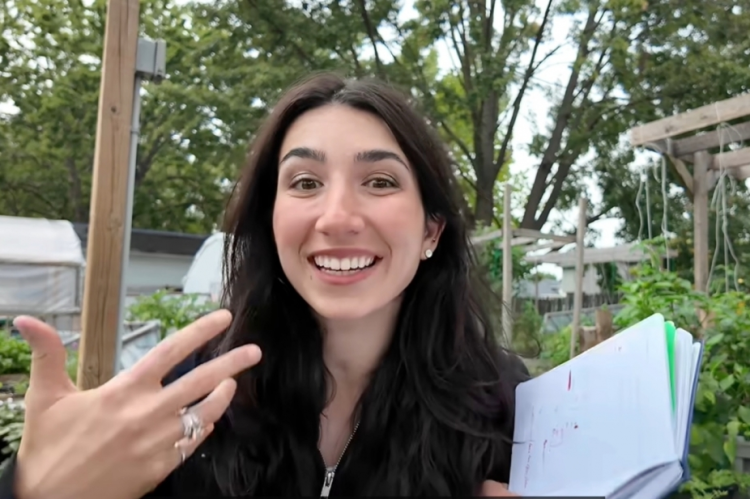
Dora Strelkova won CrunchLabs' 2026 Last Cheater Standing competition. (Courtesy of Dora Strelkova/University of Windsor)
Her winning strategy earned her $10,000 to donate to a charity of her choice and introduced her engineering skills to millions of viewers.
"It was one of the coolest things I've made," says Strelkova.
The goal of the competition was to cheat without getting caught.
She faced competitors who manipulated the game using marked cards, special glasses and a poker chip equipped with miniature wheels.
Strelkova's invention drew on her strengths in problem-solving and 3D printing.
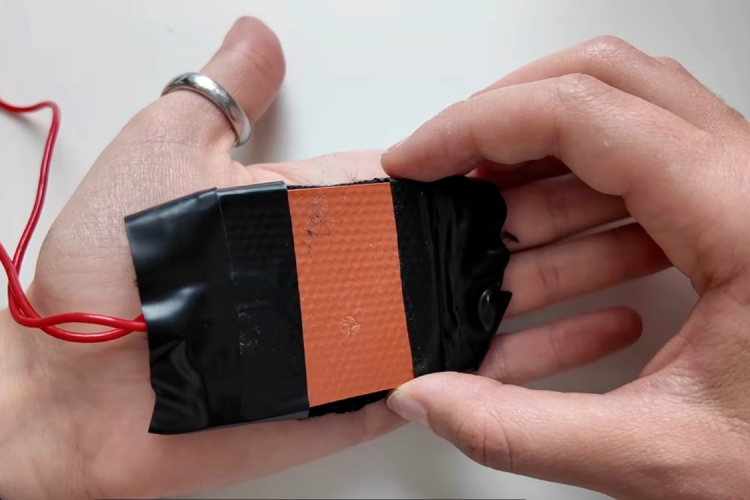
Dora Strelkova holds the handheld heater she designed. (Courtesy of Dora Strelkova/University of Windsor)
"The thermal conductivity of the resin is quite low, so you would be waiting forever trying to melt wax inside of a shell," says Strelkova.
"I thought to use graphite as a bridge, since it has a way higher thermal conductivity. The graphite rods were from the front surface into the core, so the graphite would heat up really fast and melt the wax, letting the ball bearings move around."
Strelkova shares her inventions on her YouTube channel, StrelkoMania, which has attracted nearly 40,000 subscribers.
The competition brought her work to an even larger audience, with the challenge video attracting 32 million views, and her build video attracting 1.9 million.
She describes the experience as "surreal."
"This is the biggest video that's ever happened for me, and I was able to meet a lot of creators that I grew up watching," she says.
Strelkova earned an undergraduate degree in electrical engineering, with a minor in computer science at UWindsor.
During her studies, she was an Outstanding Scholar and worked as a student researcher in Dr. Jill Urbanic's lab.
Urbanic, now Strelkova's PhD supervisor, introduced her to 3D printing, robotic gripper modelling and other aspects of mechanical design.
Strelkova continued exploring 3D printing in her doctoral research. In 2025, she won the University of Windsor's Three Minute Thesis competition for her presentation on the subject.
She also serves as president of the Graduate Student Society.
During the COVID-19 pandemic, she bought her own 3D printer. She credits that hands-on experience, along with the problem-solving skills she developed through her engineering studies, with helping her build her YouTube channel.
"In engineering they teach you how to break down complex problems and after four years you come out, hopefully an amazing problem solver," she says.
"It was a lot of stacking experiences that definitely built my skills to make it possible."
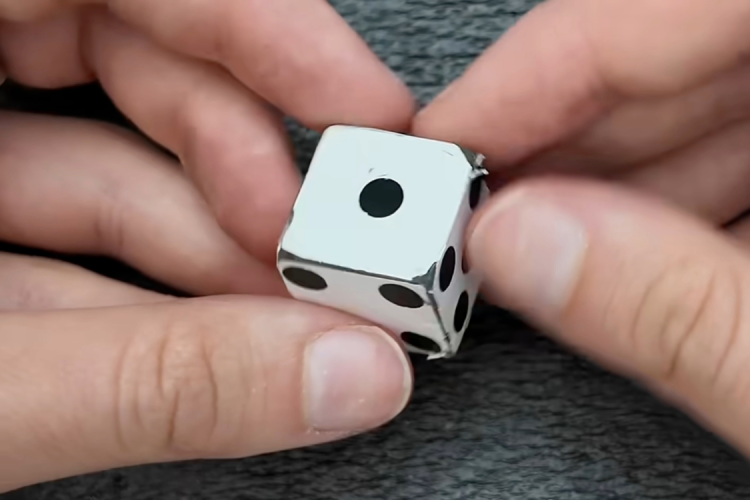
Dora Strelkova holds an early prototype of the dice. (Courtesy of Dora Strelkova/University of Windsor)
Strelkova donated her competition winnings to FIRST Robotics Canada, an organization that introduces young Canadians to robotics through hands-on programs and competitions.
"FIRST Robotics, and the mentors I had in high school, is the reason why I went into engineering," says Strelkova.
Although she credits her parents with teaching her to be resourceful, Strelkova says FIRST Robotics gave her a sense of belonging.
Through the program, students work in teams to design, build and compete with robots, developing technical and teamwork skills along the way.
"You're working long nights, things are unprecedented, things are not working, and you're troubleshooting together," says Strelkova.
"Then you come to a competition with a bunch of teams who are in a similar boat, and you have so much to talk about - it's awesome overall."


