




Nicole Goodman and her colleagues are helping municipalities prepare for elections in October with the release of two new reports examining online voting and election technology security.
"Municipal elections are growing increasingly digital, but technology processes are changing so rapidly that it can be really difficult to stay on top of it," says the Brock University Associate Professor of Political Science.
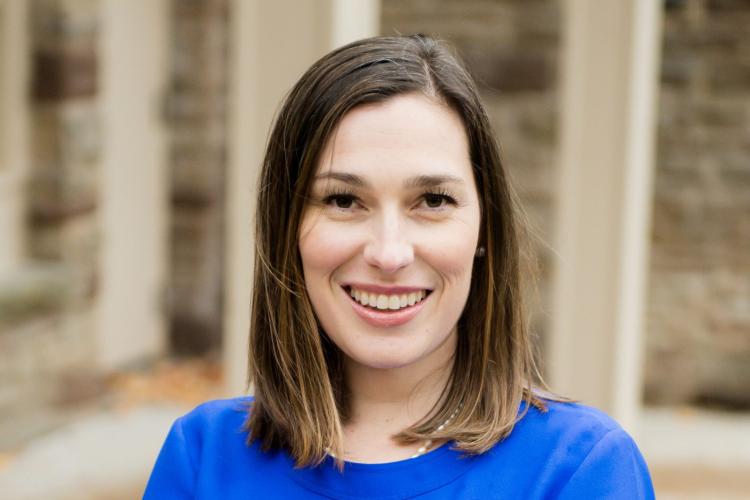
Associate Professor Nicole Goodman in the Department of Political Science is the co-author of two new research reports she hopes will support municipal election practitioners as they prepare for the upcoming elections in October.
The Municipal Security Assessment Report shares insights from a community-engaged research project with nine Ontario municipalities. The report was co-authored with Aleksander Essex of Western University and James Brunet of Carleton University as well as former and current Brock graduate students Noah Nickel (BA '22, MA '23), Carlie Pagliacci (BA '22, MA '23) and Jared Boles (BA '23).
"For this part of our research, we wanted to look behind the scenes at municipal processes and policies related to the deployment of election technologies to find any gaps we could help remedy," says Goodman. "We know from other branches of our research that technical incidents can stem from human error or not having the proper policies in place, so we wanted to share ways to mitigate these risks with the wider municipal sector."
Focus areas were chosen by participating municipalities and ranged from testing different forms of technology to recruiting and training election workers.
Andrea Coyne, Deputy Clerk for the Town of Oakville, says her two decades of experience in municipal elections have instilled a deep "appreciation for the importance of a strong, secure democratic process," adding that documentation and training are key.
"Oakville takes pride in the comprehensive training we provide to our staff, and we know it does a strong job of preparing them for voting locations," she says. "The report helped identify areas where we can build on that strength, which will further support our staff and set them up for success."
Part of an ongoing study on digital election security funded by the Government of Canada through the Social Sciences and Humanities Research Council, the report concludes with broad recommendations as well as potential carry-over of findings to future provincial and national elections that may utilize election technologies.
"Participating in this assessment gave the City of Vaughan a clearer, evidence-based understanding of both the vulnerabilities and the safeguards associated with online voting," says Todd Coles, City Clerk for the City of Vaughan. "The report's practical recommendations will help us strengthen public trust and make informed decisions to protect the integrity of future municipal elections."
Also available is The State of Internet Voting in Ontario: Findings from the 2022 Internet Voting Study, the latest in a series of reports compiled based on extensive post-election survey data collected by Goodman.
Co-authored with policy analyst Nathan Olmstead, this report reflects feedback from voters in 24 Ontario municipalities and covers topics such as reasons for choosing online voting, voter engagement trends and comparisons to earlier Ontario cycles and the more recent 2024 municipal elections in Nova Scotia.
It also offers several recommendations pertaining to mobile-friendly online voting design to promote equity, offering online voting alongside other methods and educating voters about security measures, among others.
Goodman says resources for vetting digital voting technologies can be limited in Ontario, where 70 per cent of municipalities have populations under 10,000, an inequity she wants to help address through her work.
"Why should one municipality with a large budget and the resources to adjudicate vendors have safer elections than a smaller municipality with a much lower budget?" she says. "By writing reports for a lay audience and through our work on voluntary election standards, we are creating tools that can help improve the safety and operations of digital elections."
Goodman will present this research at an online event hosted by the Niagara Community Observatory (NCO) on Tuesday, June 23 from 10 to 11:30 a.m. For more information or to RSVP, please contact NCO Research Coordinator Carol Phillips at cphillips3@brocku.ca


