




A pest is threatening B.C. vineyards, but researchers have found a sustainable solution -- a mix of parasitoid wasps, nematodes and fungi.
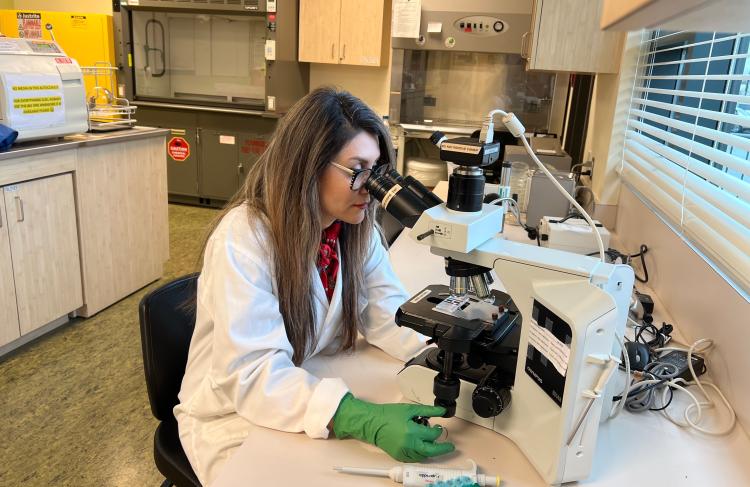
Dr. Sepideh Tahriri Adabi is helping B.C. growers protect their vineyards against climbing cutworm.
Climbing cutworm is the larval, or caterpillar, stage of various moth species. True to their name, the pests are known to climb grapevine plants to feed on new and developing buds, causing damage and reducing fruit quality and quantity. According to the BC Wine Grape Council, there are currently 18 known species of this pest in the Okanagan Valley, which is B.C.'s largest grape growing region.
"Currently, there are no registered biopesticides available to organic wine and grape growers in B.C.," says Kwantlen Polytechnic University (KPU) researcher Dr. Sepideh Tahriri Adabi.
"Growers have been dependent on chemical pesticides, but there are concerns about their impact to the environment and beneficial organisms, as well as pesticide resistance."
A three-year study led by KPU's Institute for Sustainable Horticulture and Andermatt Canada, a leader in microbial biopesticides, tested four biological tools -- entomopathogenic fungi, insect-specific baculoviruses, entomopathogenic nematodes and parasitoid wasps. Each was assessed for its efficacy in controlling the pest through controlled laboratory studies and field trials in commercial vineyards across the Okanagan Valley.
Several KPU students were also part of the research team, gaining hands-on experience within the laboratory and field, and developing skills related to data analysis and scientific communication.
The researchers found that there wasn't just one individual solution. Instead, three of the natural organisms were found to be effective in targeting the cutworm at different stages of its growth.
Parasitoid wasps were found to be effective from mid-August to mid-September, targeting cutworm eggs before they have hatched. From early-September to early-October, if any surviving eggs had hatched, nematodes and fungal pathogens were able to eliminate the young larvae.
"Sustainable pest management isn't about replacing one product with another. It's about understanding how pests interact with climate, how biological tools perform under different conditions and how a proactive, timing-based approach can help growers intervene early before any damage occurs," says Adabi.
The study lays the foundation for an integrated pest management strategy, and may aid in the future registration and commercialization of new microbial biopesticides which could help expand the toolbox available to Canadian growers and reduce reliance on environmentally harmful chemicals.
"There's a growing demand for sustainable, environmentally responsible food production, which is driving rapid growth in biological pest control technologies. Biopesticides are now part of a multi-billion-dollar global industry," says Adabi.


