




Clinical Psychology PhD candidate Sofia Melendez Ron recently received the 2026 Ontario Women's Health Scholars Award. Their research aims to improve how trans and non-binary people experience Ontario's health care system.
Melendez Ron's work challenges harmful gender norms. It also reimagines mental health services so they better support trans and non-binary people from all backgrounds - especially those facing systemic barriers to care.
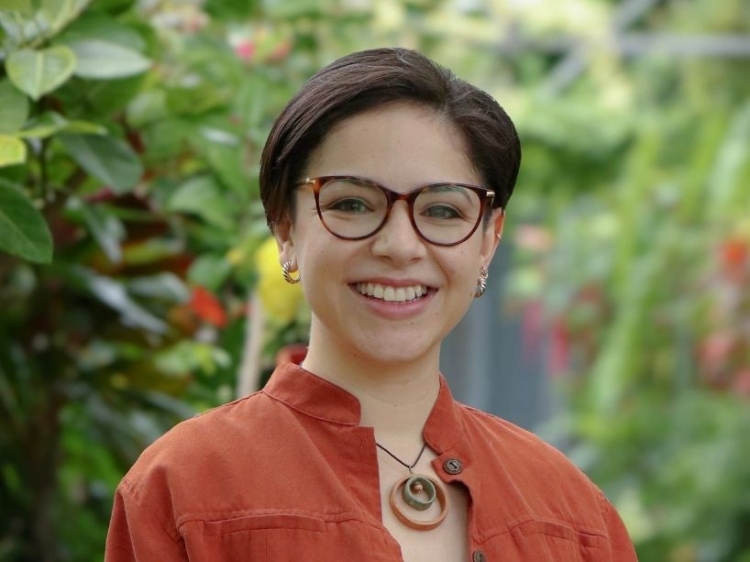
Clinical Psychology PhD candidate Sofia Melendez Ron developed an educational tool to help healthcare providers deliver more informed, inclusive care to trans and non-binary persons
Where the research began
Melendez Ron first saw the need for this work while at the Sexual Health Resource Centre in Kingston, Ont. There, she witnessed both the progress and problems in trans health care up close.
They saw real advances that made it easier for people with diverse identities to access care and education. But the role also showed them the barriers trans people still face when seeking medical treatment.
"I recall various clients at the Sexual Health Resource Centre describing exhaustion from needing to educate their therapists about basic aspects of transgender health," said Melendez Ron.
Many clients also weren't given clear explanations for their gender dysphoria assessments. One client told Melendez Ron the process felt less like health care and more like gatekeeping.
"Both examples are not rare experiences for trans and nonbinary people, as shown in several systematic reviews," Melendez Ron said.
Cost is another major barrier. OHIP doesn't cover mental health, and many private insurance plans only pay for a small amount of therapy.
"With these issues, it is important not to blame individual healthcare providers, but to look at the larger structures that make these negative healthcare experiences frequent," she said.
Melendez Ron's research draws on both quantitative approaches such as the Standards for Educational and Psychological Testing (2014), and scholarship that centres the lived experiences, knowledge and social realities of trans communities. This includes research published in Transgender Studies Quarterly, scholarship by trans activists working in law and policy, and the work of Brazilian educator Paulo Freire, who understood education as a means of challenging systems of oppression and supporting social change.
"Bringing these perspectives together allows us to assess the tools' effectiveness while asking whose knowledge they represent, how it's produced and how education can support more responsible care," said Melendez Ron.
A new tool to close the training gap
Mental health disciplines have long pathologized trans lives, Melendez Ron explained, often acting as gatekeepers rather than caregivers.
"While robust trans health training exists for physicians and nurses, specialized resources for mental health providers were virtually non-existent," said Meledez Ron.
That gap leaves mental health trainees feeling unprepared to work with trans and non-binary people. The result: harmful missteps, unexamined biases and a level of mistrust that pushes many trans people away from health care altogether.
Melendez Ron grew up in western Mexico, on land shared by the Wixárika, Coca and Tecuexe Pueblos Originarios. As a queer Mexican-Canadian, genderfluid immigrant living with invisible disabilities, she built their research around one guiding principle of nothing about us without us.
That principle led Melendez Ron and their collaborators to develop the Trans Teaching Tool (TTT) - a case-study-based resource for clinicians, educators and curriculum developers.
The tool includes:
- Patient case studies drawn from real-world, intersectional experiences
- Multiple-choice and short-answer questions
- Educational feedback for use in training and research.
The goal is to give educators practical, evidence-based resources that prepare clinicians to understand and respond to what trans patients actually need.
Melendez Ron built the project with a team of trans and non-binary collaborators: Jane Mao (they/them), Bee Goldgruber (she/her), Argo Basembe (they/them), Matt Bruno (he/him) and Fides Arguelles (they/them). Each contributed lived expertise and shared decision-making throughout the research.
"My passion for trans health education grew directly from seeing the deep gap between institutional guidelines and the actual care trans people received," she said.
Q&A with Sofia Melendez Ron
TorontoMet Today asked Melendez Ron a few questions about their research process.
Transgender and nonbinary collaborators helped develop the tool. How did their perspectives shape your research?
Trans and non-binary collaborators were the driving force behind this project. Despite our core team's diverse experiences, we recognized that our personal experiences couldn't represent the whole community.
As such, over 30 trans community members reviewed the tool during a research phase completed in my master's degree. Trans expert consultants pointed out that training must focus on teaching providers how to engage in open, respectful dialogue rather than applying one-size-fits-all training protocols within mental health.
What would you like to see change in how health professionals are trained - and in the experience of a trans patient walking into a clinic?
I want to see a fundamental shift away from medical gatekeeping and diagnostic authority needed to access gender affirming healthcare within Canada. Further, OHIP still follows the outdated standards of care from 2011 from the World Professional Association for Transgender Health (WPATH) despite new standards being published in 2022. The old standards from 15 years ago have requirements that are not consistent with best practice as defined by both trans communities and health experts across the world.
Updating systems ensures that when a trans patient walks into a clinic or hospital, they are met by an environment that is proactively prepared for them so they don't have to carry the financial and emotional burden of educating their provider or "proving" their gender.
Ultimately, care should not focus solely on suffering but also helping patients be well-supported on their journey to authenticity, well-being and dignity.
What is one thing you wish every health care provider understood before treating a trans patient?
I wish every provider understood that trans experiences are not a monolith; every journey is unique, and there is no single or "correct" way to express gender. Providers shouldn't treat gender diversity as something to fear. Profound joy, connection, and resilience arise when people are supported in the free, self-directed exploration of their gender; this joy is what we call gender euphoria.
Finally, providers, organizations and training programs must take proactive responsibility to educate themselves about inclusive practices before a patient arrives, rather than placing the burden of education onto the patient sitting in front of them.
Sofia Melendez Ron would like to acknowledge and thank their supervisors, Fiona Thomas (PhD, CPsych), Maria Gurevich (PhD), and Saad Chahine (PhD), as well as her committee members and mentors Lee Airton (PhD), Tae Hart (PhD, CPsych), Alyssa Counsell (PhD), and Michelle Searle (PhD, CE, OCT).
In addition to the Ontario Women's Health Scholars Award, the project has been funded through the Vanier Canada Graduate Scholarship, HOPE Centre Seed Research Grant, Jackman Foundation Psychology Research Excellence Grant, CPA Scientific Affairs Committee Student Research Grant, Jean Royce Fellowship, Soroptimist Foundation of Canada, Ontario Graduate Scholarship and Joseph Armand Bombardier Canada Graduate Scholarship.


