




Using solar energy is good for the environment, but look down, and the grass isn't always greener.
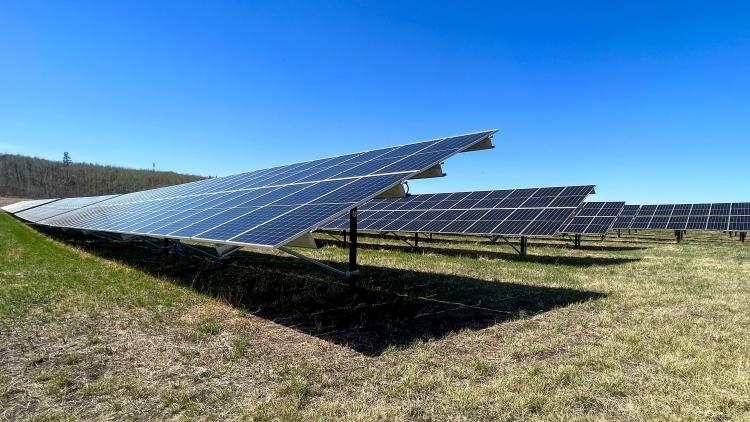
University of Alberta research is shedding light on how to give native grasses a better foothold around solar panels. (Photo: Fengxue Zheng)
While solar panel farms can generate massive amounts of renewable energy, when they're built in natural areas, they change the growing conditions underneath, making it easy for native grasses to be squeezed out by invasive weeds and non-native plants. On top of that, fast-growing turf or other non-native grasses are often used as a less costly, more convenient replacement in reclamation efforts.
Now, a new University of Alberta study is shedding light on how to give that native vegetation a better foothold by exploring how those plants and grasses respond to the microclimates created by solar panels.
It's environmentally important to identify native grasses that can thrive under the panels because they offer many more ecological benefits than non-native species, says Fengxue Zheng, who led the study to earn a master of science in rangeland and wildlife resources in the Faculty of Agricultural, Life & Environmental Sciences.


