An exciting change is underway at George Brown Polytechnic. In February 2026, we will name our Chef School atrium in honour of William Peyton Hubbard, a visionary leader who championed equity, inclusion, and innovation. In the lead-up to this event, we invite the George Brown community to learn more about Hubbard's legacy and accomplishments.
The upcoming naming of our Chef School atrium is an opportunity for us to mark an important milestone together. As George Brown and the broader post-secondary sector face significant challenges due to government policies affecting international enrolment and finances, moving the organization forward in ways to promote inclusive education and belonging remains a key priority.
As Toronto's first Black elected official, an inventor, and a pioneering civic leader, William Peyton Hubbard helped shape the city we live in today. Now George Brown Polytechnic is celebrating Hubbard's legacy - and his connection to our school's namesake - by naming a campus space in his honour.
"Hubbard's impact on the city was profound, from putting the hydro-electric system in public hands to working to ensure all people were welcome in this city," said Natalie Wood, a professor in the Social Service Worker program and Research Studio Lead for Black Futures Initiatives.
Three years ago, while on secondment to the Office of Anti-Racism, Equity and Human Rights Services (OAREHRS) to lead the development of the Black Futures Initiative (BFI), Wood proposed naming a campus space after Hubbard. A deep dive into local history revealed a powerful story of political influence, social impact and allyship - including a significant connection to George Brown and to the culinary industry.
Hubbard's life was shaped by resilience and possibility.
"William Hubbard was the son of parents who escaped enslavement and traveled to freedom by way of the Underground Railway. His parents carried a vision for a future that did not yet exist. Hubbard rose from that vision to become Toronto's first Black alderman and an acting mayor at a time when Black civic participation was neither welcomed nor supported," said Jennifer Grant, Associate Vice-President, Anti-Racism, Equity and Human Rights.
"At every step, he expanded what was possible through discipline, brilliance, and an unwavering commitment to his city. His story reminds us that possibility can be created even in places where it has never been seen before."
While his personal journey was extraordinary, so too was his lasting influence on Toronto.
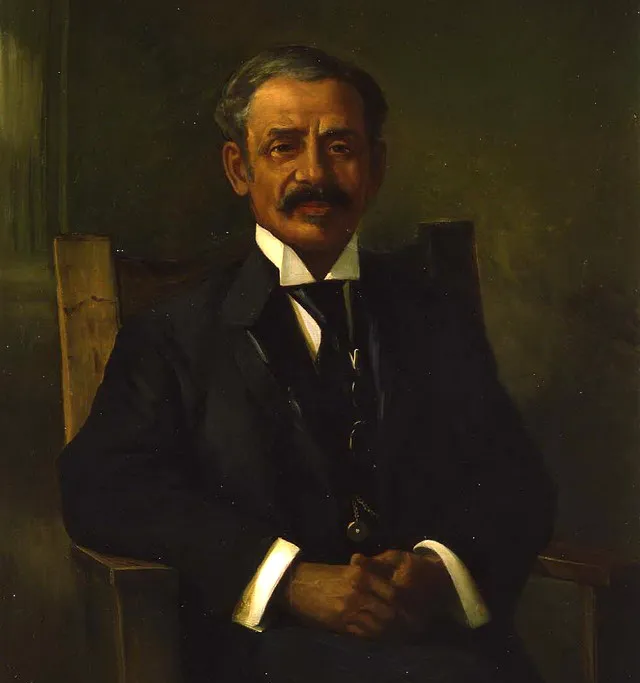
Portrait of William Peyton Hubbard. Original publication: City of Toronto Art Collection, Cultural Services
Hubbard's early years
Born in 1842, William Peyton Hubbard came of age in a young Toronto still defining itself. His early years were marked by resilience, ambition, and resourcefulness. He worked to pay for his own books, excelled academically, and was known for an intellect that later strengthened his public leadership. The son of parents who had escaped enslavement, Hubbard navigated a city shaped by both opportunity and deep prejudice, building a life grounded in self-determination and service.
Hubbard first trained as a baker and spent sixteen years in a craft he mastered through creativity and technical innovation. His apprenticeship in cake making led to his invention of the patented Hubbard Portable Oven in the 1890s, a mobile industrial oven that influenced commercial baking and led to the formation of the Hubbard Portable Oven Company.
At thirty-four, Hubbard shifted his focus and embarked on a new career as a horse drawn cab driver in a relative's livery business. This move set the stage for the encounter that would shape his public life. While working as a driver, Hubbard met George Brown, the reformer, and Globe (now Globe & Mail) publisher who played a central role in Toronto's anti-slavery movement. Some accounts describe a dramatic rescue after a carriage accident; others note a quieter first meeting. What is clear is that the relationship deepened quickly. Connected through common commitments to civic responsibility, social justice, and the public good, Brown recognized Hubbard's leadership potential and supported his entry into municipal politics.
What began as a working relationship evolved into mentorship and a friendship that opened the door to Hubbard's formative political career, positioning him as a transformer of Toronto's civic landscape in the decades that followed.
Shaping Toronto
Despite widespread discrimination, Hubbard ran for city council in one of the wealthiest, whitest wards in Toronto and won on his second attempt. He would go on to be elected 14 more times, serving as alderman, controller and acting mayor.
During his time in office, Hubbard championed the improvement of roads and waterworks and the creation of High Park. Recognizing that electricity should be affordable to all, he led the push for publicly owned utilities and was instrumental in the formation of what is now Hydro One.
Hubbard was also a strong advocate for the rights of marginalized communities, speaking out against racist taxes targeting Chinese laundry operators and defending the Jewish community against street harassment.
Fostering belonging
George Brown will name the atrium of 300 Adelaide St. E. after Hubbard to honour this legacy. The unveiling will open this year's Black Futures Month in February. The naming supports ongoing efforts to advance meaningful inclusion of Black communities in post-secondary education, while continuing to advance George Brown's values of Equity and Belonging.
"This is an opportunity to tell a richer story of who we are as a community, while inspiring imagination and innovation," said Grant. When students, staff and communities can see themselves reflected in their environment, she added, it fosters a sense of belonging and psychological safety, both essential for learning, growth and achievement.
While the naming is just one step of many, Wood hopes it sends a powerful message to Black students.
"You belong and you are intricately woven into George Brown and into the city," she said. "Not only do you have a right to be here, but we want to create opportunities for you to blossom and to step into a future that is inclusive."
Source: Hubbard, Stephen L, "Against All Odds: The Story of William Peyton Hubbard Black Leader and Municipal Reformer," Digitus - Online Exhibitions from the Thomas Fisher Rare Book Library, accessed November 23, 2025.
To learn more about how George Brown is addressing anti-Black racism and creating inclusive spaces, visit the Black Futures webpage.