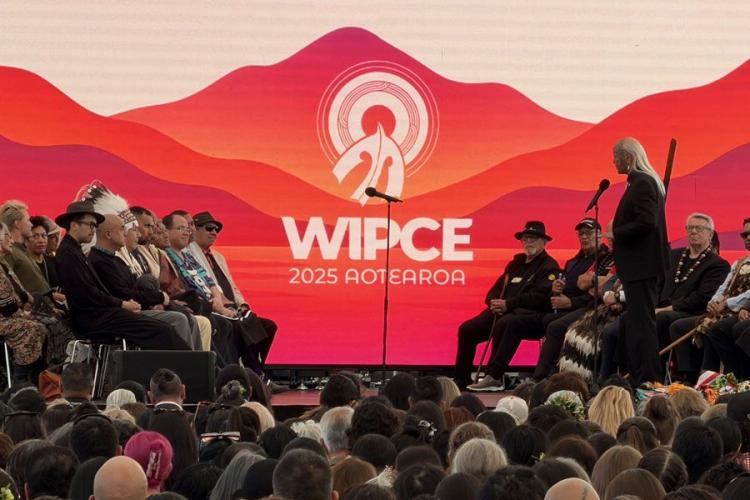
On Wednesday, November 12, 2025, a delegation of 50 Cree School Board teachers and staff set out for Auckland, New Zealand (Aotearoa) to attend the World Indigenous Peoples' Conference on Education (WIPCE), held from November 16-21, 2025. WIPCE is recognized globally as the leading conference on education created by Indigenous people and for Indigenous people. This year's gathering, hosted by the Māori people of Aotearoa, brought together nations from every corner of the world to honour, share, and strengthen educational practices, and celebrate culture and identity.
Reflecting on CSB's presence at the event, Chairperson Dr. Sarah Pashagumskum shared,
"WIPCE reminded us why our work matters. It gave us the chance to connect, to share, and to learn with Indigenous educators worldwide. Now, going back, we return inspired and committed to keeping our language, our culture, and our worldview at the heart of everything we do at the heart of iiyiyiu education. We remain so proud to stand with those nations who share our vision."
Throughout the week, CSB delegates participated in keynote presentations, hands-on workshops, learning circles, and cultural exchanges. Teachers gained valuable teachings and practical approaches they will bring back to their home communities across iiyiyiu aschii. These learnings from fellow educators, knowledge keepers, and researchers offered new tools to strengthen local approaches to teaching and learning. From strategies for language preservation and cultural revitalization to land-based education grounded in traditional knowledge, participants explored methods that honour the unique strengths of Indigenous learners.
Teacher Carmen Faries of Wemindji reflected on her experience:
"One of the things I'm taking away is the knowledge from Māori culture. It's important for us to know because of the connections to our own history. I'm hoping that when I go back to my class, I'm going to incorporate some of the teachings and learnings I picked up over the last few days."
WIPCE 2025 also highlighted emerging technologies and innovative educational methods designed to support future generations. Delegates explored how digital tools, multimedia resources, and new models of community-led learning can inspire students who will one day become the future Elders of our communities.
As Pearl Weistche, Coordinator of iiyiyiu Chiskutimaaschaawin, emphasized,
"It is important for a child to know themselves, instead of other ways of teaching. Our language and our culture are the most important things for a child to learn."
With keynote sessions centered on self-determination, decolonizing education systems, cultural and linguistic renewal, youth leadership, and Indigenous worldviews, the conference provided a powerful space for reflection and growth. The workshops and sharing circles fostered collaboration among Indigenous nations, allowing participants to connect, learn, and exchange ideas that will continue to strengthen Indigenous education globally and enrich the work of the Cree School Board for years to come.