Content notice: This article discusses themes of suicide.
The University of Windsor has joined a groundbreaking effort to support mental health and improve safety along the waterfront.
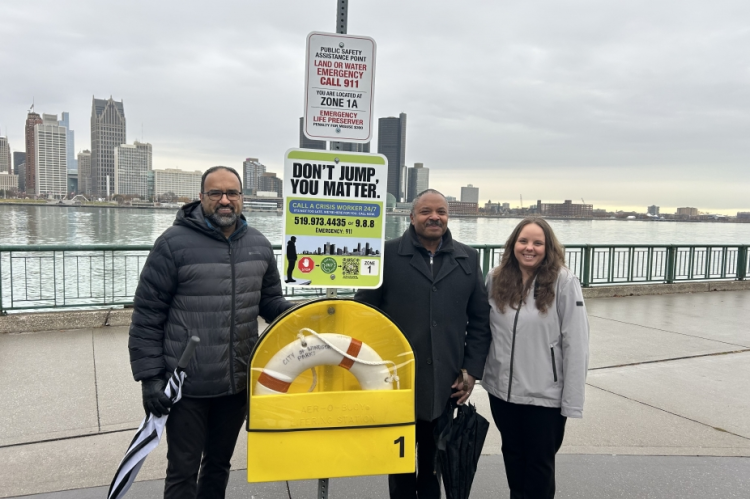
UWindsor members of the Lifeline Windsor Project team stand beside an example of a new COMPASS station on Windsor's waterfront (left to right): Dr. Mohsan Beg, Counselling & Wellness Services; Mike Akpata, Special Constable Service; Katie Chauvin, Office of the Vice-President, People, Equity, & Inclusion. (SUBMITTED BY KATIE CHAUVIN/University of Windsor)
As a key partner in the new Lifeline Windsor Project, launched on Nov. 18, UWindsor is helping advance how the community supports people in moments of crisis.
The initiative combines technology, innovation and accessibility with best practice research, compassion and human dignity to create a first-of-its-kind safety system aimed at preventing drownings and suicide attempts along the Detroit River waterfront.
Led by Windsor Police Service and developed with the Canadian Mental Health Association Windsor-Essex County Branch, the Windsor-Detroit Bridge Authority, Port Windsor, the City of Windsor and UWindsor, the project introduces a network of COMPASS Stations. These multi-purpose safety hubs feature clear crisis-intervention signage, QR codes connecting to 24/7 mental-health supports, new life buoys and GPS-coded location markers to help first responders reach people quickly.
UWindsor's Special Constable Service, Student Health, Counselling & Wellness Services and the Office of the Vice-President, People, Equity & Inclusion contributed to the design and development of the project.
The University provided expertise in public safety, mental health and suicide prevention, and led a consultation on draft crisis intervention signage that engaged 45 members of the campus community - including students, staff, faculty, clinicians and individuals with lived experience.
Their feedback directly shaped the language, layout and universal imagery used in the final design to clearly convey the crisis intervention message to everyone, including those who are not fluent in English.
"Our community told us what messages resonate and what signage elements will be most impactful in moments of distress," said Mike Akpata, superintendent of UWindsor's Special Constable Service. "This project aims to reach people in crisis with immediate access to mental health support and a simple but powerful message: You matter, we care and you are not alone."
UWindsor developed the content for the Lifeline Windsor Project website in partnership with the Windsor-Essex County Suicide Prevention Coalition means safety working group. Website material draws on UWindsor's It Matters that You're Here suicide-prevention initiative, offering multiple ways for people in crisis to seek support based on their comfort level and needs.
Dr. Mohsan Beg, director of Student Health, Counselling & Wellness Services, emphasized the role COMPASS stations play in meeting people where they are.
"When someone is seriously thinking of taking their own life, they may be feeling an overwhelming sense of hopelessness, worthlessness, or despair that makes it hard to see a way through," he said. "This signage provides direct language that speaks to that pain while offering a lifeline of hope by accessing help in that critical moment."
The initiative builds on the broader work of the Windsor-Essex County Suicide Prevention Coalition, a group of over 40 community leaders focused on mental health, well-being and safety guided by the Mental Health Commission of Canada's Roots of Hope framework.
UWindsor's involvement reflects its ongoing commitment to supporting suicide prevention both on campus and in the wider community. It aligns with the University's dedication to partnering with local organizations on meaningful projects that make a difference.
"Suicide prevention requires a layered approach, where community partners work together to strengthen our systemic safety net" said Katie Chauvin, UWindsor's employee mental health co-ordinator. "The Lifeline Windsor Project provides one more way to help someone in crisis connect with coordinated care."
Plans are underway to expand the initiative, including the installation of crisis-intervention signage on the UWindsor campus and at the Gordie Howe International Bridge. Funding for the project was provided through the Gordie Howe International Bridge Community Benefits Plan.
The University hopes community members see its involvement as part of its ongoing commitment to advancing mental health support and suicide-prevention leadership within the postsecondary sector and across Windsor-Essex.
If you or someone you know is thinking about suicide, support is available. Visit UWindsor's It Matters that You're Here website for information and free, confidential resources.
Employees can access additional supports here.