A child who uses a lower-limb prosthesis faces unique challenges when it comes to activities most children take for granted, such as running and being active. Without access to a prosthetic device designed to support these movements, children may miss out not only on the simple joys of play, but also on critical opportunities for physical development during key stages of growth.
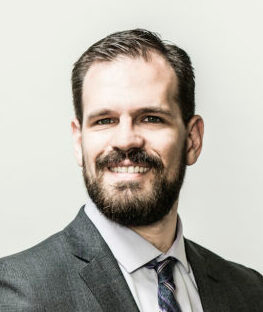
York University mechanical engineering Associate Professor Garrett Melenka
York University Lassonde School of Engineering Associate Professor Garrett Melenka is working with project lead George Mason University Assistant Professor Quentin Sanders and Jonathon Schofield, an associate professor at the University of California, as part of a collaborative research team working to make high-performance prosthetic limbs more affordable, accessible, and better tailored to the needs of active children. The three received a three-year, $500K grant in the fall from the U.S. National Science Foundation to support the project.
Most standard foot or leg prostheses are built for basic walking, not for the kind of active movement that helps children develop strength, balance, and coordination, the benefits that come from running and jumping with friends.
"By combining manufacturing, composite materials, prosthetics, design, and biomechanics, this project provides an innovative and holistic solution," said Melenka.
Often seen in competitive events such as the Paralympic Games, running blades are curved, spring-like prosthetic feet made from carbon fiber that mimic the energy return of a biological foot. While these devices offer an alternative option to standard leg prostheses and can enable children to run, they are expensive and often inaccessible. A single running blade can cost several thousand to tens of thousands of dollars and is typically not covered by insurance because it is considered non-essential, rather than medically necessary.
Some charitable organizations help families access these devices, but demand far exceeds supply, and for growing children, one blade is rarely enough. "Kids grow quickly," said Sanders. "As they get taller, they outgrow their prostheses, which means going through multiple blades over time."
The research team has several goals, starting with identifying what children truly need from an activity-enabling prosthesis. The researchers will examine how motivation to be active, physical growth, and different types of movement influence prosthetic performance in everyday settings.
The team will also analyze how children move while using their current running blades, studying activities such as running, jumping, and changing direction to better understand the biomechanics and physical demands involved.
Finally, the team will take a close look at how today's running blades perform under real-world demands, looking at how stiff they are, how much load they can handle, and when they might fail, and using that information to create blades that are better suited for active play.
The collaborators are using an advanced additive manufacturing approach known as continuous-fiber 3D printing, in which carbon fibers are embedded within the printed plastic to reinforce the prosthetic structure. This method enables the creation of strong, lightweight devices that can be tailored to a child's size, growth, and activity needs.
The technique is already used to produce strong, lightweight components in the aerospace and automotive industries, but it has seen limited adoption in prosthetic design. This project represents one of the first efforts to apply it systematically to activity-enabling prostheses for children.
"What's most exciting about this project is the collaboration across institutes, disciplines, and areas of expertise," said Schofield. "We are bringing together researchers in movement mechanics, advanced materials manufacturing, and pediatric lower-limb prosthetic care. We are also incorporating the lived experience of children and families, along with clinicians who work with these patients every day."
Read the original story from George Mason University here.