Simon Fraser University (SFU) researchers have received over $4.4 million from the Canadian Institutes of Health Research (CIHR) through its Project Grant: Fall 2025 program to advance health research and health outcomes.
The funding supports four SFU-led projects that address some of society's most pressing health challenges including the overdose crisis, mental health and post-traumatic stress disorder (PTSD), age-related cognitive decline and dementia, and chronic diseases such as obesity, diabetes, heart disease and cancer.
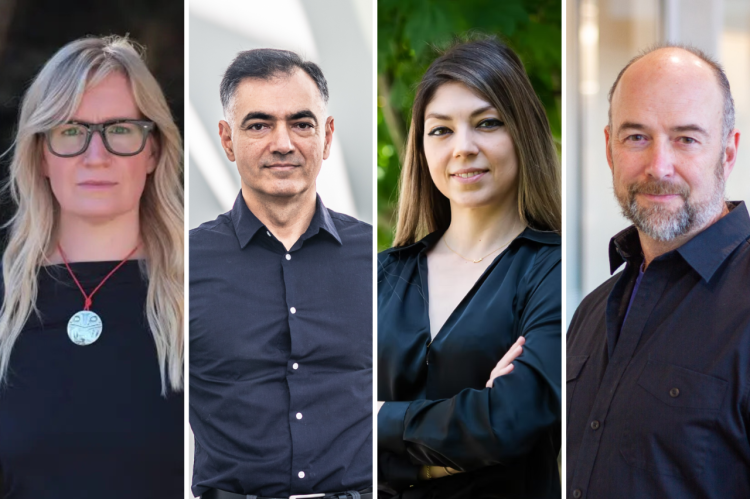
SFU researchers Kora DeBeck, Mirza Faisal Beg, Faranak Farzan and Randy McIntosh have been awarded more than $4.4 million from the Canadian Institutes of Health Research (CIHR) through its Fall 2025 Project Grants program.
"With support from CIHR, SFU researchers continue to innovate and deliver solutions that make a real impact in strengthening our economy and improving health outcomes for communities across Canada," says Dugan O'Neil, SFU's vice-president, research and innovation. "This investment underscores SFU's role as a leading research university, advancing an inclusive and sustainable future."
Mirza Faisal Beg, School of Engineering Science, Faculty of Applied Sciences
CT and MRI scans capturing detailed 3-D images of the body, including muscles, bones and organs, are often used to assess the severity and progression of common conditions such as obesity, diabetes, cardiovascular and lung disease, and cancer. Measuring these structures is essential for personalized care, yet manual measurement can take hundreds of hours and requires specialized expertise, making routine use impractical.
Professor Mirza Faisal Beg and his team are developing an AI system that learns from human anatomical experts to automatically analyze full-body MRI scans in minutes. Their technology rapidly measures muscles, fat, bones, and organs, providing a comprehensive quantitative assessment of organ/tissue health. With global commercialization planned, Beg and his team aim to support earlier detection and more personalized care with improved outcomes, strengthening SFU and Canada's leadership in medical AI.
Kora DeBeck, School of Public Policy, Faculty of Arts and Social Sciences
Fatal drug overdoses in Canada have surged in the past decade, prompting the implementation of controversial public health interventions, like innovative medications, drug-checking technologies and supervised consumption. But are these interventions actually saving lives?
Public policy professor, CIHR Applied Public Health Chair and Dorothy Killam Fellow Kora DeBeck and her research team evaluate whether these approaches effectively reduce the risk of fatal overdoses. Drawing on unparalleled rich historical survey data from the At-Risk Youth Study (ARYS) cohort going back two decades, DeBeck and her team are generating policy-relevant science to guide public health responses to the overdose crisis.
Faranak Farzan, Mechatronic Systems Engineering, Faculty of Applied Sciences
Eight per cent of Canadians are impacted by PTSD, with even higher rates among veterans, first responders and health-care workers. Around 50 per cent of people with PTSD also have major depressive disorder (MDD), which leads to more severe symptoms, higher suicide risk, and poorer quality of life. Although many treatments exist, choosing the right one is trial-and-error, so people can spend months on options that don't help. One promising treatment for depression in PTSD is deep transcranial magnetic stimulation (dTMS), a non-invasive brain stimulation treatment delivered in clinics.
Mechatronic Systems Engineering professor Faranak Farzan and her team previously built a simple non-invasive brainwave test (EEG) predictor that forecasts who will respond to a common antidepressant. Because most EEG predictors were built for MDD-only medication trials, this study fills the gap by developing tools that can help clinicians match the right patients to dTMS. Farzan's research aims to improve health outcomes and reduce the strain on Canada's health care system.
Randy McIntosh, Biomedical Physiology & Kinesiology, Faculty of Science
Cognitive function changes with age, with some individuals experiencing healthy and resilient lives while others face challenges and frustrations in daily living from cognitive impairment.
Neuroscientist and director of SFU's Institute for Neuroscience and Neurotechnology Randy McIntosh and his team of researchers study how small changes in the brain can lead to impactful challenges for some people while others remain unaffected. Their research will inform current interventions for dementia and support healthy cognitive function in aging.
SFU is one of Canada's fastest-growing research-intensive universities, with sponsored research income increasing 144 per cent over the past decade to $286 million in 2025. Consistently ranked among the country's top 15 research universities in national and global rankings, SFU is home to more than 60 research centres and institutes and offers unique support for knowledge mobilization, entrepreneurship and partnerships.