McMaster University and the University of Alabama at Birmingham (UAB) continued to deepen their collaboration during a recent visit by McMaster leaders to UAB.
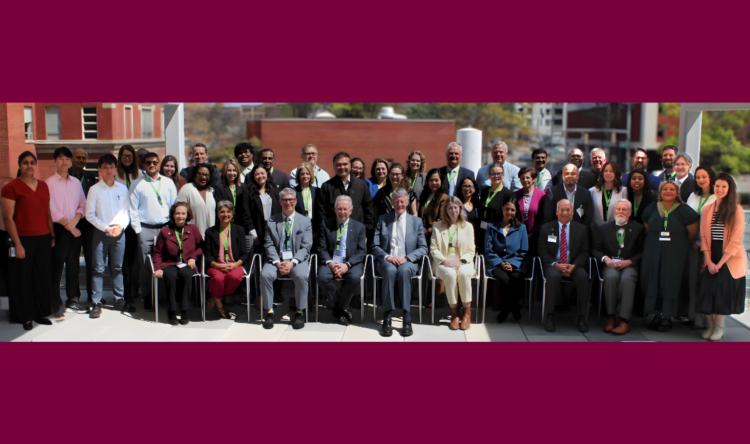
The collaboration, rooted in shared vision and philanthropy, continues to accelerate joint work in global health, biomedical innovation, education and research. Over the years, the partnership has evolved into a dynamic, action-oriented alliance with growing momentum and measurable outcomes.
Senior leadership aligns on priorities and next steps
Leaders, faculty members, and researchers from both universities gathered to review progress and set priorities for the next phase of collaboration.
McMaster's Vice-President of the Faculty of Health Sciences and Dean of the Michael G. DeGroote School of Medicine, Paul O'Byrne, and UAB's Senior Vice-President for Medicine and Dean of the Heersink School of Medicine, Anupam Agarwal, opened the meeting with a welcome to committee members.
"It was wonderful to be with our colleagues at the University of Alabama at Birmingham and to reflect on our collaboration to date and build momentum for the many opportunities ahead," O'Byrne said.
This was followed by presentations from McMaster Provost Maureen MacDonald, and UAB Provost Janet Woodruff-Borden, who emphasized expanding opportunities across both institutions and a collective readiness to shift from planning to implementation.
"Bringing colleagues together like this moves collaboration from concept to reality. It helps us see where our priorities align and build on our complementary strengths, creating opportunities neither institution could achieve alone," said MacDonald. "Together, McMaster and UAB are connecting research to world impact while improving health outcomes, strengthening communities and addressing complex challenges."
Innovation and commercialization at the forefront
Biomedical innovation and entrepreneurship were highlighted as major pillars of the partnership. Leaders from both universities shared updates on commercialization strategies, translational research, and emerging opportunities in data science.
The discussion underscored how UAB and McMaster are uniquely positioned to bridge the gap between discovery and application through shared infrastructure, complementary strengths, and collaborative innovation models.
Advancing global health through collaborative research
Global health remains a cornerstone of the UAB-McMaster partnership. Strategic sessions highlighted joint research aimed at addressing pressing local and global challenges, including chronic disease, women's health, and equitable access to care.
Subcommittee updates showcased substantial progress and a growing portfolio of shared grants and projects.
Building educational pathways and student mobility
Another key focus was the advancement of joint educational initiatives. Discussions included Master of Science in Global Health (MSGH) programs, student exchange opportunities, stacked certificate models and expanded experiential and global learning pathways.
Faculty from both universities reported progress on curriculum integration and program design that will support more accessible, flexible, and globally connected training for emerging health leaders.
Joint pilot grants demonstrate impact
The afternoon featured presentations of UAB-McMaster joint pilot grant projects spanning:
- Radiopharmaceuticals and advanced imaging
- Skeletal muscle preservation during glp1-associated weight loss
- Heavy menstrual bleeding research in Cameroon
- Biomedical engineering innovations
- Health physics and radiation science
These interdisciplinary projects reflect the strength of the partnership's collaborative networks and its commitment to tackling complex health challenges.
A partnership inspired by philanthropy
The meeting concluded with remarks from Marnix E. Heersink and Mary Heersink, whose philanthropic leadership continues to guide and inspire the partnership. Their vision has helped catalyze innovation and global impact across both institutions.
As McMaster and UAB look ahead, the partnership is poised to deepen its global health impact, strengthen research pipelines, and advance educational collaboration to communities locally and around the world.
This article was originally published on UAB Medicine News.