When Ching Hei Cheung, who goes by Chris, arrived in Victoria from his home in Hong Kong, Chinatown barely registered.
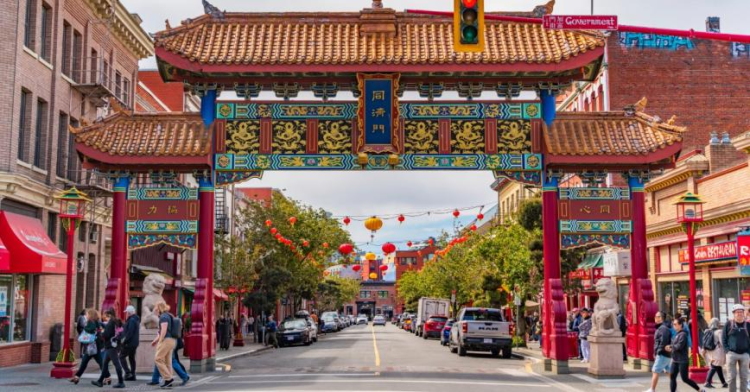
Like many newcomers, he understood Asian life in British Columbia through large centres like Vancouver and Richmond. To him, Victoria's Chinatown, the oldest in Canada, was a place you move through, not one you stop to consider.
That changed at Royal Roads University, in the Master of Arts in Tourism Management program.
"I basically knew nothing about Victoria's Chinatown or even Asian history here," says Cheung, who now works as a program associate for RRU's School of Tourism and Hospitality Management. "But once I started learning, it sparked my interest."
What began as curiosity became a question that stayed with him. Who decides what a place means, and what happens when that meaning begins to shift?
In his thesis, Exploring place attachment and impacts of landscape changes in Victoria's Chinatown, Cheung asks how the people most connected to Victoria's Chinatown understand what is changing, and what might be at risk of being lost. His research shows that while tourism has brought more attention and business, it is increasingly being shaped for visitors rather than the community that has long called it home.
More than a historic site
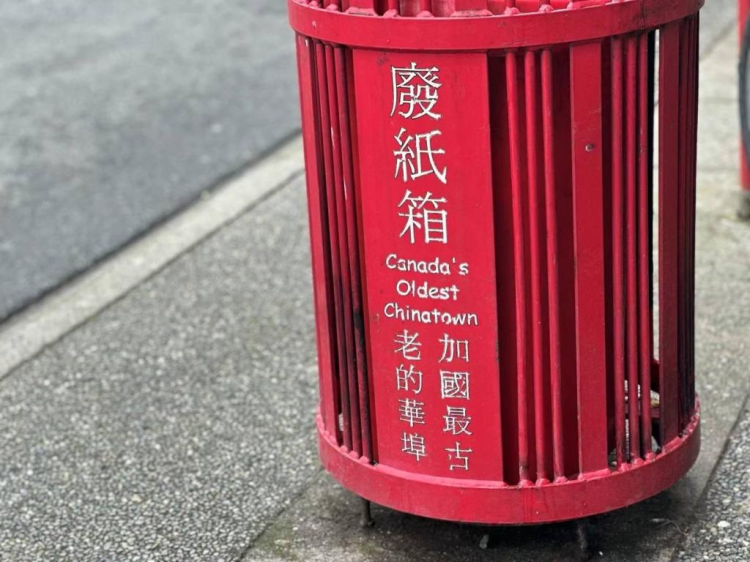
Chinatown is often described through what can be seen gates, storefronts, heritage buildings, a recognizable aesthetic shaped by history and tourism alike.
Cheung was less interested in what is visible than in what is felt.
"I wanted to understand how the people closest to this place actually feel about what is happening," he says.
Through conversations with community leaders and an analysis of how Chinatown is represented to visitors, he found no single narrative. There is no clear arc of progress or decline.
What exists instead is something more unsettled.
Holding two truths at once
Cheung uses the term "contested place attachment" to describe what he heard.
People spoke with pride about Chinatown - about its endurance, its cultural weight and its role in shaping identity across generations.
They also spoke with hesitation.
Commercialization has brought visibility and economic activity, but also concern that Chinatown is increasingly shaped for those passing through it, rather than those who have long been part of it.
"It's not just good or bad," Cheung says. "People can feel proud and connected, but also frustrated or disappointed."
The contradiction is not a problem to solve. It is the reality of a place being asked to be many things at once.
The cost of visibility
Tourism sits at the centre of Chinatown's future.
It brings attention, funding, and the possibility of preservation. It also introduces pressure to perform. To present a version of Chinatown that is legible, consumable and consistent.
Cheung points to what is often called "staged authenticity," where cultural spaces are shaped as much by expectation as by reality.
"It keeps Chinatown visible and active," he says. "But it also raises questions about whether that visibility comes at a cost."
What is gained is not always what is kept.
Listening, not deciding
Cheung does not offer a solution. He does not suggest a single path forward.
What he offers instead is a shift in approach.
"I hope people start to understand different perspectives from the community," he says. "Not just propose plans, but take the time to understand the people connected to them."
If there is a future for Chinatown, it may not lie in preserving it as it once was, nor in reshaping it entirely for what comes next.
It may lie in something quieter. A willingness to listen. To hold competing truths. To recognize that places, like people, carry histories that do not resolve neatly.
"If Chinatown could speak," Cheung says, "I think it would be glad that Chinese people no longer need to live there to feel safe, but it would still want its story to be remembered."
A personal thread
For Cheung, the work became personal in ways he did not anticipate.
In tracing the history of Chinatown, he came across figures connected to its preservation who shared his own Hong Kong background. The distance between past and present, between here and home, felt suddenly smaller.
"It felt like a thread across time," he says. "Someone from where I come from helped protect this place, and now I'm here learning from it."
Today, he volunteers with the Victoria Chinatown Museum, continuing the work in a different form. Not as a researcher, but as someone contributing to the ongoing story of the place.
"Chinatown is not just heritage," he says. "It's a living community."
Canada marks Asian Heritage Month in May. Want to keep the celebrations going? Visit our Asian Heritage Month webpage for more stories about Asian people in our community, to learn about upcoming events and discussions, and to find cultural and educational resources put together by the Royal Roads Library.