It won't be to a galaxy far, far away, but a group of University of Calgary students are set to launch their satellite into orbit.
CalgaryToSpace will watch their FrontierSat satellite head to space aboard a SpaceX Falcon 9 rocket in the early hours of May 3. The satellite, which is about the size of a loaf of bread, will then be deployed from a pod on the rocket by the team's launch partner, Exolaunch.
The team will then get to work on establishing contact with FrontierSat and operating it from the ground at their mission control centre at UCalgary's Rothney Astrophysical Observatory, just southwest of the city.
CalgaryToSpace was formed in 2020 to give undergraduate students experience in the space sector. Since then, team members have been working to build FrontierSat, a tiny satellite known as a CubeSat.
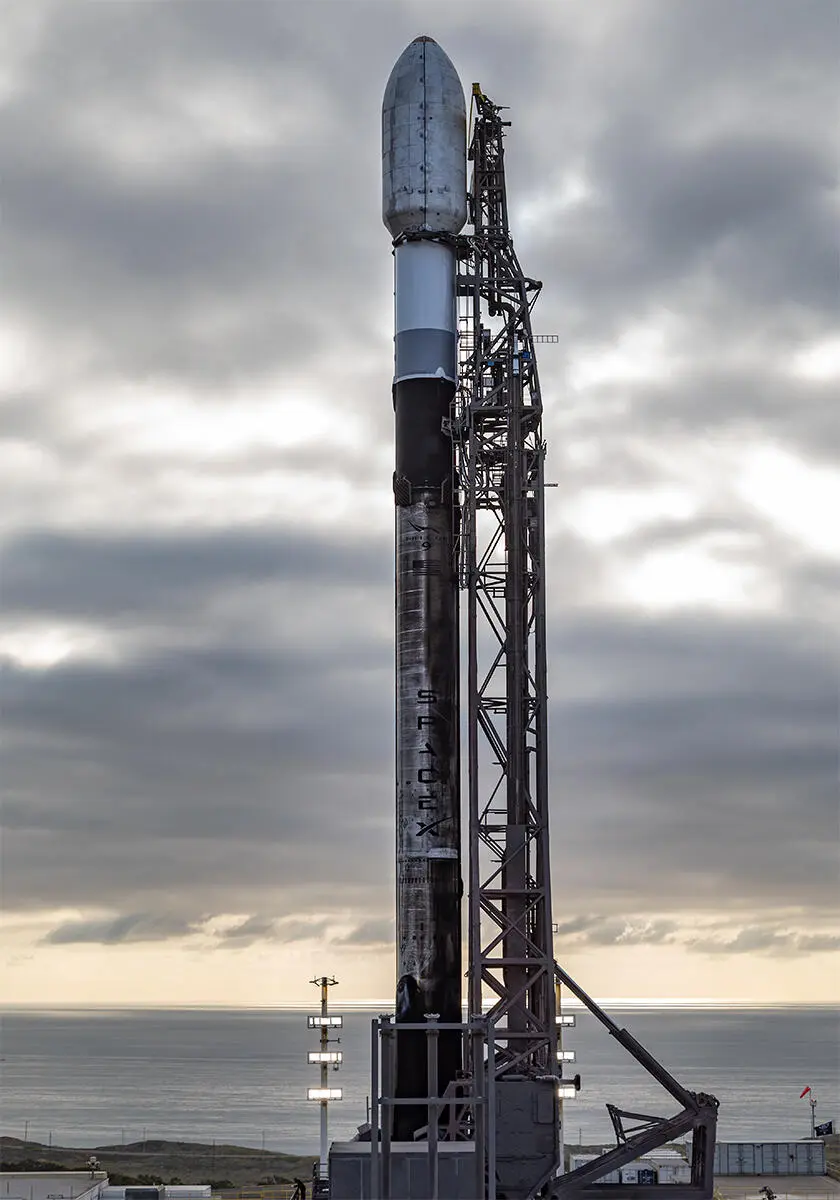
Courtesy SpaceX
"Launch has been our goal for a really long time," says Aarti Chandiramani, CalgaryToSpace president and fifth-year geomatics student. "To be able to say it's actually happening is really exciting and really rewarding for the whole team because people have put thousands of hours into this project over the years."
While some of the team will watch the launch livestream from Calgary, others plan to fly down to California to see it in person.
The time and problem-solving skills of the team were needed right up to the delivery of the satellite to California.
Originally, they planned to fly the satellite down to Vandenberg Space Force Base as a carry-on for integration on March 31. However, on March 26, that plan was no longer feasible due to complications with Customs and they had to pivot.
The team had to rent a U-Haul and drive it over the border to Montana, as that was the only vehicle available on short notice to do a one-way trip from Canada to the United States. From there, they rented another car to get them and the satellite to California, a road trip that took four days to complete.
"It was really fun, me and a bunch of my teammates are super close, so we enjoyed the trip," says Chandiramani. "There were some stressful moments, but we're all good problem solvers, so we were able to roll with whatever came our way."
The launch is only the beginning of the work for CalgaryToSpace, which plans to operate the satellite for at least three years.
For Dr. Johnathan Burchill, PhD'03, an assistant professor in transdisciplinary space science and aerospace technology with the Department of Physics and Astronomy in the Faculty of Science, the launch will mark the continuation of his work investigating upper atmospheric ionized winds, as his mini-plasma imager serves as the main payload on FrontierSat.
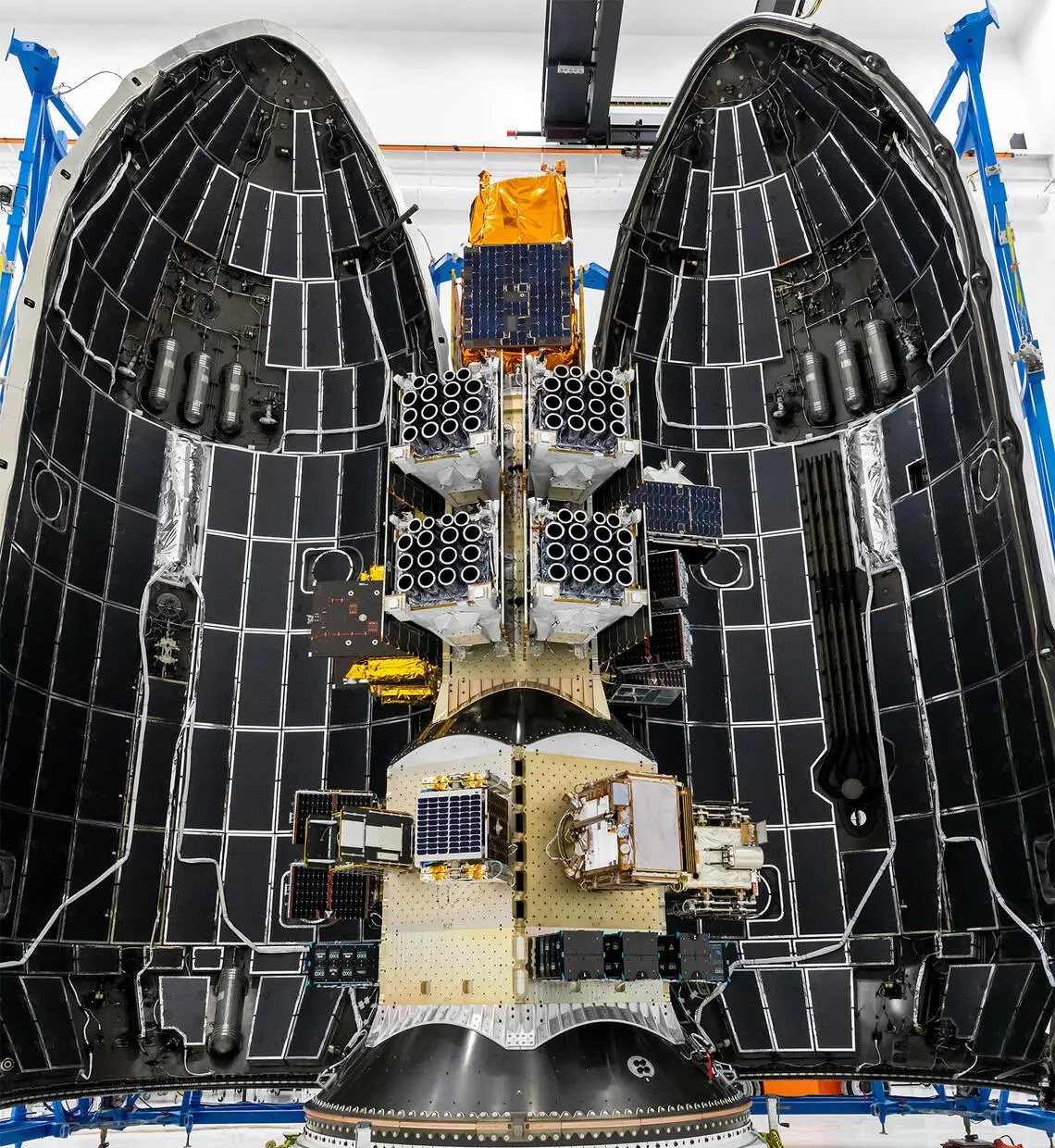
Courtesy SpaceX
In particular, the goal is to unlock some of the mysteries of STEVE (Strong Thermal Emission Velocity Enhancement), a mysterious glowing ribbon of purple light that sometimes arches across the night sky, which has puzzled aurora borealis chasers and intrigued scientists such as Burchill.
"It's exciting because the sensor itself was developed back in 2016 or 2017," says Burchill. "We ended up being able to build a prototype and put it on a shelf and wait for a mission to fly it on, so this is the inaugural orbital operation of one of these plasma sensors."
CalgaryToSpace won't end with this mission, as they've already begun planning and designing satellite No. 2 in parallel with starting mission operations on FrontierSat.
The team wants to apply all the knowledge and lessons learned from FrontierSat to Satellite 2, while also diving into making more parts in house instead of buying commercially, and expanding their science objectives.
"It allows us to prove that this first satellite won't be our last one," says Chandiramani. "We want to have the legacy of the team live on through future satellites."
The rocket launched and the satellite was successfully deployed on May 3, 2026.