There's a quiet crisis in kidney disease in Indigenous communities, a crisis that, according to experts, would likely be headline news if it was nearly any other population.
"We know that 50 per cent of the people in Saskatchewan waiting for a kidney transplant are status First Nations ... that does not even include non-status First Nations or Métis people," says Dr. Caroline Tait, PhD, a professor with the University of Calgary's Faculty of Social Work and Cumming School of Medicine. "So we know that the rates are very high compared to the broader population."
Tait has spent the last decade researching and raising awareness about the importance of organ donation and transplantation in Indigenous communities. Her leadership and commitment is reflected in a recent $1.7-million grant from the Canadian Institutes of Health Research (CIHR).
The project, "Addressing Systemic Gaps and Barriers Experienced by Indigenous Peoples when Accessing Organ Donation and Transplantation Medicine," has multiple goals that include creating a lived experience data base that captures the experiences of Indigenous peoples in British Columbia, Alberta and Saskatchewan around organ transplant and donation.
The need for organ donations in that community is urgent, and Tait, who is a Tier I Canada Research Chair in Indigenous Health Equity and Inclusion, and whose PhD is in medical anthropology, has spent a good part of her career focused on understanding the barriers to organ donation faced by Indigenous peoples, while simultaneously trying to spark meaningful conversations about the issue in First Nations communities across Canada.
To better understand the barriers faced by Indigenous peoples, Tait, who is also the Indigenous Lead, Indigenous Platform of the Canadian Donation and Transplantation Research Program, has collected digital stories of the lived experiences of Métis and First Nations organ donors and transplant recipients.
Stories like the mother from northern Saskatchewan who had to drive many hours for the many medical tests and assessments needed to become a living kidney donor for her daughter.
"(Her home) is about three hours from ... where she did the testing. Every time she has to do a test, she has to drive three hours there and drive three hours home," says Tait. "That may be for blood tests that take 20 minutes. It's expensive and she has to take time off work."
Tait says being a living kidney or liver donor requires intensive testing over several months, done in clinical and hospital settings that, for many Indigenous donors, can be many hours away from their home. Taking time away from family and work and travelling alone on icy roads are only two of the challenges a living donor can face as they go through assessment.
For Indigenous individuals diagnosed with end-stage organ failure, living in remote and rural areas, this almost always means the only available treatment is equally far away, requiring extensive travel or temporary or permanent relocation away from their home. For these patients, Tait says, a transplant offers them not only an opportunity for improved health, but the chance to return home.
Tait believes the stories of Indigenous patients and families strategically inform the collection of quantitative data about organ donation and transplantation, because it allows for a deeper understanding of the journey of patients and families.
"When our team aligns the stories that people tell us with what we know from quantitative data, it gives a much richer picture of what is going on and where the barriers and gaps are within the donation and transplant system," says Tait. "Unfortunately, for Indigenous patients and families, their experiences with organ donation and transplantation is greatly influenced by social determinants that can negatively impact their access to timely assessment and treatment."
Filling in the blanks
"This project is really about understanding what's happening to people beyond hospital and clinical walls," Tait explains. "If we want to improve outcomes, we need to understand the full context of people's lives."
One of the first goals of the study will be to fill in some of the many data gaps. For example, Tait says that, while very little quantitative data has been collected about Indigenous organ transplant and donation in Canada, the data that does exist often raises more questions than answers; for example, the fact that 50 per cent of the people in Saskatchewan waiting for a kidney transplant are status First Nations. "So, we know the rates are high in comparison to the general population," she says. "We assume that the rates are also high in Alberta and possibly in British Columbia, but what we are lacking is data and information."
Tait's research team and Indigenous partners will be working with the Canadian Institute for Health Information to address some of the quantitative data gaps, while simultaneously developing a complementary qualitative data base.
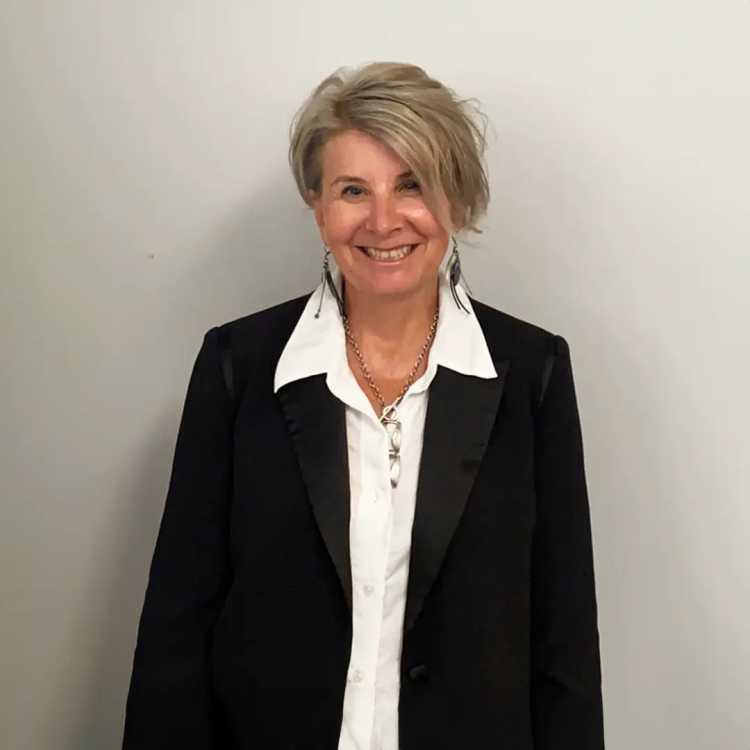
Caroline Tait. Photo Courtesy Caroline Tait
Building a first-of-its-kind lived-experience database
Before creating the first lived experience database focused on organ donation and transplantation among Indigenous Peoples in Canada, Tait, who is a member of the Métis Nation of Saskatchewan, began by ensuring collaborators would have sovereignty over their data.
This means applying the respective First Nation and Métis research and data sovereignty principles to lived experience data.
Each lived-experience research participant will hold ownership over their data, including over how long their data will be part of the database, as well as ensuring their right to access their own information, and giving the ability to add to their stories as their personal donation or transplant journey unfolds.
The other important factor is education and ensuring that Indigenous people who participate in the research and Indigenous health leaders consider the database a worthwhile research endeavour, and one which will contribute to raising awareness of organ transplant and donation as a health-care priority. Tait's research group has strong ties with Grand Chief Stewart Phillip, president of the Union of British Columbia Indian Chiefs (UBCIC), who, as a double-transplant recipient, understood the importance of the research.
Phillip, who Tait describes as an "incredible champion for organ donation and transplantation," facilitated the development of a resolution that was passed by the UBCIC, identifying organ donation and transplantation as a health-care priority. UBCIC shared its resolution with First Nations Chiefs in Manitoba who put forward a resolution to the Assembly of First Nations (AFN) that passed in September 2025, making organ donation and transplantation an AFN priority.
"When people talk about community-based research and how to participate in a way that mobilizes change, you must listen to key leaders such as Grand Chief Phillip," says Tait. "This is what community-based research should do. You listen, you respond, and you help move things forward in ways that matter to Indigenous people. It was exciting to see the resolution passed. Now the AFN has a dedicated person who is working on organ donation and transplantation. So, this is really positive."
Mining statistics through a living database
Tait's CIHR research project will gather in-depth qualitative data from a wide range of participants, including patients who are waiting for or recovering from transplants, as well as living donors and their families. It will also include caregivers, families who have faced end-of-life donation decisions, and health-care providers working within the donation and transplant system.
Through interviews, digital storytelling and community-based research, the project will document not just participants' medical journeys and the barriers they face, but also capture the social, financial and cultural realities that shaped these journeys.
"We want to understand the lived experience of Indigenous patients and families, good and bad, whether that's dealing with the long distances they need to travel for health are, financial constraints, juggling family and employment responsibilities, or experiences, both positive and negative, with the health-care system," says Tait.
The findings will support Indigenous health leaders, policymakers and national organizations working to improve Canada's donation and transplant system, while also contributing to broader international collaborations with Indigenous researchers in countries such as Australia, New Zealand, the U.S. and Brazil.
Shifting the conversation and the system
Beyond data, the project continues Tait's focus on changing the way people think about organ donation and transplantation. Tait says conversations often focus on donation alone, without considering the experience of receiving an organ, or the broader social realities that influence both.
"There's a need for public education, but also for cultural safety," she says. "Some Indigenous people don't feel safe engaging with the health-care system at all. This has to be addressed."
By amplifying lived experiences, including difficult or under-represented stories, the research will help surface patterns that might otherwise be dismissed as isolated incidents.
"It's not about one story," Tait adds. "It's about understanding what happens when many stories start to tell the same thing."
A long-term vision for Indigenous-led knowledge
Tait hopes the database will continue to grow well beyond the life of the grant and will become a long-term resource led by future generations of Indigenous researchers and communities.
"This is something I'd like to see continue after I retire," she says. "Because the need isn't going away."
Addressing that need begins with identifying barriers, informing policy and strengthening public understanding. In doing this, Tait says the research has the potential to spark conversations and awareness about organ donation and transplantation and hopefully address systemic issues to improve health-care equity in organ donation and transplantation, ultimately saving Indigenous lives.
"At the end of the day, this is what our work is all about," she says. "Making sure Indigenous people have an equal opportunity to live."
UCalgary's Faculty of Social Work is ranked second in Canada and in the top 15 social work schools in North America in research productivity. The faculty is known for innovative, community-engaged and collaborative research that brings together diverse disciplines and partners to address some of society's most pressing challenges.