

Simon Fraser University's diverse and interdisciplinary research has been recognized in the latest round of John R. Evans Leaders Fund (JELF) support.
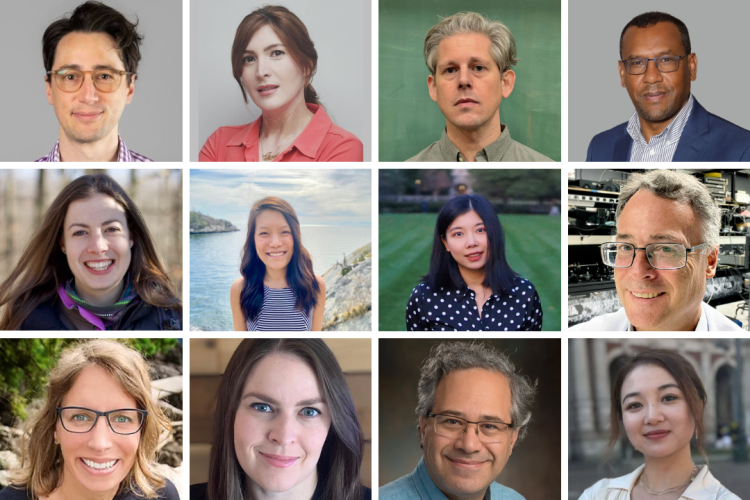
12 scholars from five faculties share more than $1.86 million in funding for projects that span family health, environmental sciences, new materials, climate innovation, quantum technology and more.
"Canada is investing in researchers and innovators whose ideas will drive our future prosperity," says The Honorable Mélanie Joly, Minister of Industry and Minister responsible for Canada Economic Development for Quebec Regions. "Through more than $118 million in funding from the Canada Foundation for Innovation, we are equipping researchers with the cutting-edge infrastructure they need to advance discovery, attract top talent and build Canada's economic growth and resilience."
"The JELF awards highlight the remarkable range of research excellence at SFU, from advancing quantum technologies and climate solutions to improving health and well-being in our communities. Access to state-of-the-art research infrastructure is essential for discovery and innovation," says Dugan O'Neil, Vice-president, research and innovation. "These investments will help our researchers push the boundaries of knowledge, tackle challenges that matter to Canadians and provide exceptional training opportunities for the next generation of scientists and scholars."
JELF is a strategic investment program by the Canada Foundation for Innovation (CFI) designed to help Canadian universities, research hospitals, and institutions attract and retain top-tier research talent by providing the state-of-the-art infrastructure researchers need to succeed.
This round of CFI funding supports 357 research infrastructure projects at 68 postsecondary institutions across Canada.
The SFU John R. Evans Leaders fund recipients
Tanya Brown, Marine Ecotoxicology/Biological Sciences
Brown's new research program is aimed at understanding how environmental change and contaminants are impacting the health of marine mammals and their food webs. Her research will contribute to the conservation and recovery of at-risk species, and guide measures to reduce the impact of contaminants on aquatic environments.
Emily Cameron, Education
Becoming a parent increases risk for mental illness in all parents. In fact, one in 10 non-birthing parents (fathers, 2SLGBTQ+ parents) will struggle with their mental health during this time. Cameron's Family Foundations Lab will use wearable technologies and digital mental health tools to better understand and support the mental health of non-birthing parents and their families.
Daniel Higginbottom, Physics
Higginbottom receives funding for a Cryogenic Colour Centre Quantum Control Apparatus to design and optimize silicon devices for high-fidelity distributed quantum gates and long-distance quantum networking. This leverages existing infrastructure to deliver a globally unique apparatus for research to push the boundaries of quantum networks and computing.
Sharon Hou, Education
Many young people face barriers because health, education, and community services are not designed to reflect their cultural contexts or lived experiences. Hou's project addresses that gap. The Culture and Child Health Lab will work with youth, families and community partners to develop culturally responsive approaches that improve health equity and access to care for children and youth.
Tristan Hynes, Psychology
Canada is facing an unprecedented opioid crisis, and recreational gambling is also on the rise. Hynes studies why some people are more vulnerable to addiction and relapse than others. He is building a first-of-its-kind research platform to uncover how the brain and body contribute to opioid and gambling addiction, helping develop better treatments and prevent relapse.
Thomas Jennewein, Physics
Canada Excellence Research Chair
Jennewein is developing technologies for more secure quantum communication networks while helping train the next generation of quantum experts. The Quantum Communication Node Facility will enable scientists to test ways to send information securely using quantum technology over fibre-optic cables, through the air, and via satellites, helping pave the way for a future quantum internet.
Daniel Leznoff, SFU Distinguished Professor, Chemistry
Leznoff is developing advanced materials that could improve technologies ranging from clean energy and pollution reduction to chemical sensing and environmental monitoring. Using specialized X-ray equipment to study these materials at the atomic level, his research team aims to better understand how a material's structure affects its properties, leading to the design of more effective technologies.
Mengxin Pan, Geography
Climate change is making extreme weather events like heavy precipitation, heatwaves, and drought more frequent and intense worldwide. Mengxin Pan is establishing the new Climate and Weather Extremes Laboratory that uses advanced computing and AI to improve predictions of extreme weather and help communities prepare for the impacts of climate change.
Tina Shoa, Sustainable Energy Engineering
The global shift toward electrification and decarbonization is driving urgent demand for batteries that are safer, longer-lasting, and more intelligent. Shoa is developing an AI-enabled battery research platform that can monitor battery health in real time, detect problems early and improve the safety, performance and lifespan of next-generation energy storage technologies.
Fitsum Tariku, Sustainable Energy Engineering
Fitsum Tariku is developing low-carbon building materials made from natural and locally available resources to help create more energy-efficient, affordable and climate-friendly buildings. His work will help Canadian communities advance the use of locally available bio-based and earth materials, strengthen local economies, and meet climate targets while addressing affordability and housing shortages.
Sophie Wilkinson, Resource and Environmental Management
Over the past decade more than 50 million hectares of land have burned across Canada, primarily in the boreal forest. Sophie Wilkinson's Boreal Wildfire and Combustion Analysis Hub will study the drivers of wildfire severity in boreal forests to improve prediction, management and climate adaptation strategies.
Xinyue Xu, Earth Sciences
Critical minerals, such as lithium, cobalt, niobium, and rare earth elements, are essential for high-tech and emerging technologies, yet geological processes driving their formation, and therefore the optimal exploration and extraction strategies, remain poorly understood. Xinyue Xu is studying how these minerals form in the Earth's crust, helping improve the discovery and sustainable development of resources needed for clean energy technologies.
Visit John R. Evans Leaders Fund to learn more about funding opportunities at SFU.
For more on research and innovation at SFU visit: sfu.ca/research.
---
The Government of Canada's Research Support Fund (RSF) supports with funding for staff who help SFU researchers increase success, reduce administrative burden, and make it possible for the university and SFU faculty to successfully compete for the most significant and prestigious grants, prizes and awards available. This includes staff from the Institutional Strategic Awards (ISA) office and faculty-based grant facilitators.