

Two UBC Vancouver faculty members, Dr. Patrick Keeling and Dr. Rachel Scholes, have been awarded $1-million Wall Fellowships, the university's highest-value internal research award. The fellowships will support a deeper exploration of hidden forces shaping human and ecosystem health, from toxic pollutants in urban environments to the largely unexplored microbial networks that sustain our oceans.
"The Wall Fellowships are awarded annually to two of UBC's most outstanding researchers and give them the freedom to pursue ambitious ideas with the potential for lasting impact," said UBC President and Vice-Chancellor Dr. Benoit-Antoine Bacon. "Dr. Keeling and Dr. Scholes exemplify the breadth and ambition of research at UBC, and we are incredibly proud of the work they are leading. We are deeply grateful to Dr. Peter Wall for his transformative generosity and the enduring legacy he established in support of research and discovery at UBC."
The Wall Fellowships are one of the most significant internal research awards offered at a university in North America, and the flagship of UBC's Peter Wall Legacy Awards. Vancouver land developer and visionary philanthropist Dr. Peter Wall's transformative gift now exceeds $165 million and provides an annual investment in UBC research support.
Backed by five years of funding, the researchers will expand their work across British Columbia, from mapping largely unknown microbial life along the coast to developing new ways to keep toxic tire chemicals out of salmon-bearing streams. Both projects will build on partnerships with communities across the province - advancing research that will contribute to a healthier and more resilient British Columbia.
Mapping the invisible networks that sustain our oceans
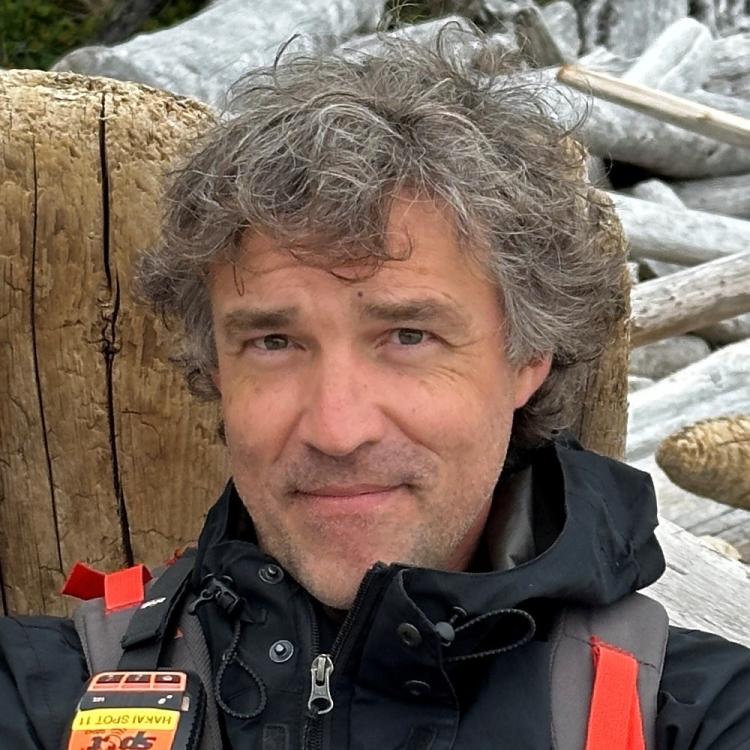
Dr. Patrick Keeling
For Dr. Keeling, professor in UBC's Department of Botany, the fellowship provides the resources to address what he sees as one of the biggest challenges in ocean science: despite how much we depend on the ocean, we still know remarkably little about how it works. Scientists are only beginning to establish a baseline understanding of the microscopic organisms that live there, how they interact and the roles they play.
"How are you supposed to monitor change if you don't even know what the baseline is?" asked Dr. Keeling.
Dr. Keeling's research focuses on the microscopic organisms that underpin life in the oceans and the complex ways they interact with the animals around them. Many have not been studied in detail, and most have never been seen or described before. With the support of the Wall Fellowship, he will map microbial networks among marine invertebrates along the B.C. coast, documenting the microbiomes of understudied animals and looking for connections between the communities they carry. The work will give scientists a clearer picture of these microbial communities and how they function within ocean ecosystems.
The research will also investigate hidden reservoirs of marine pathogens. Using single-cell genomics, Dr. Keeling and his team will study wild parasites that have not been cultivated in a laboratory. Building a record of what these parasites are, where they occur and which species they infect could give scientists a critical head start when new marine diseases emerge.
Dr. Keeling hopes to expand this work along the B.C. coast in collaboration with the Hakai Institute. The project will also support established environmental genomics workshops with First Nations youth in coastal communities. For Dr. Keeling, the fellowship is a chance not only to advance the research, but also to help more people understand why studying these largely unseen organisms matters, and why building that knowledge is essential to recognizing and responding to changes in ocean ecosystems.
Understanding the hidden health costs of our roads
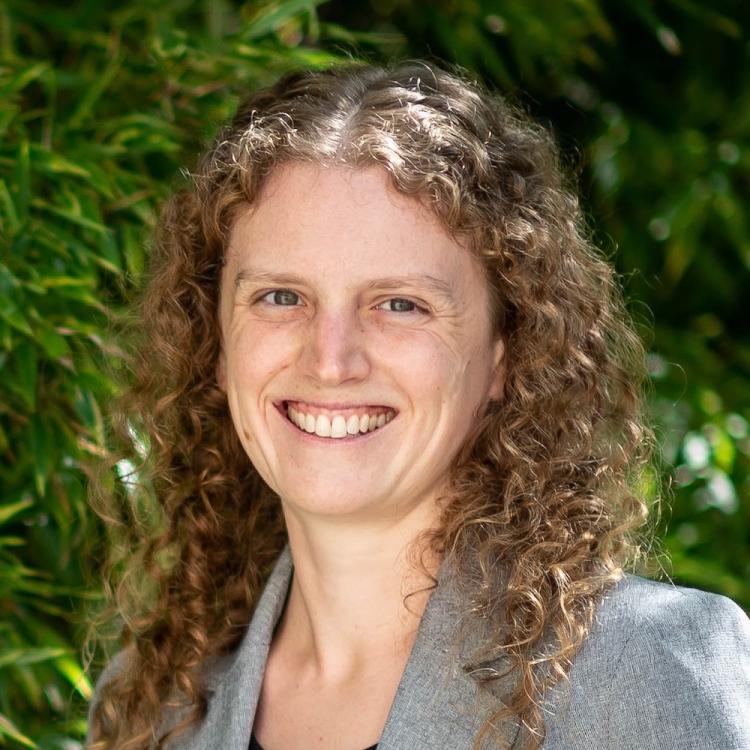
Dr. Rachel Scholes
For Dr. Scholes, assistant professor of environmental systems engineering, the fellowship provides an opportunity to take a problem her team is already working to solve and tackle it at a much larger scale. Every time a car travels down a road, it leaves behind particles from its tires. When it rains, chemicals from those particles can wash into nearby waterways, contributing to toxic pollution that has been linked to coho salmon deaths in B.C. Tire wear also contributes to airborne particles people can breathe in urban environments.
One chemical in particular has drawn significant attention: 6PPD-quinone, a breakdown product of a tire additive that is highly toxic to coho salmon. And yet, many of the chemicals released from tires remain poorly understood, including how they move through the environment and their potential impacts. With the support of the Wall Fellowship, Dr. Scholes will broaden her team's research on human and freshwater ecosystem exposures to tire-derived chemicals.
Her team will also develop and test ways to reduce contamination, building on earlier research showing that green infrastructure approaches such as rain gardens can help capture contaminants from stormwater before they reach streams. The goal is to identify solutions that can work in real-world urban settings.
Working with municipal and First Nations partners in B.C., including ongoing work to mitigate toxic runoff entering important salmon-bearing streams on First Nations lands, Dr. Scholes hopes to turn emerging research into practical approaches for protecting waterways and communities.
The fellowship will also allow Dr. Scholes to build a broader network around the issue. She hopes to bring researchers, government, First Nations and other organizations together through a stormwater research hub at UBC that can continue to grow beyond the five-year fellowship.
"My hope is that the stormwater hub becomes something bigger than just me and my research group," said Dr. Scholes.
Research-driven solutions to real-world challenges in B.C.
In addition to the two Wall Fellowships, this year's Peter Wall Legacy Awards program includes 19 graduate student awards and eight additional faculty research awards - including three individual and five team projects. Together, they represent an exceptional breadth of research spanning climate resilience, water stewardship, biodiversity conservation, sustainable agriculture and forestry, Indigenous governance, and innovative solutions.
The projects tackle these challenges from a range of perspectives, from investigating the impacts of climate change on salmon and coastal ecosystems, to advancing sustainable agriculture and forestry practices, exploring Indigenous-led approaches to watershed stewardship, and developing technologies to support better environmental decision-making. Together, this year's award recipients are united by a commitment to building a more sustainable and resilient British Columbia.
Working in partnership with a diverse network of community and non-profit organizations, government, Indigenous Nations, industry partners and research institutes, these researchers are translating innovative ideas into practical solutions that will help communities and ecosystems adapt and thrive in a changing world.
JOURNALIST RESOURCES
Full list of Wall Legacy Award recipients, with a description of their projects: https://walllegacyawards.ubc.ca/awardees-2026/