

York University's UNESCO Chair in Reorienting Education towards Sustainability (EDS) has contributed to the development of a new UNESCO guidance tool that helps educational institutions turn sustainability commitments into action.
The tool's lead authors Charles Hopkins, UNESCO Chair at York, and Katrin Kohl, co-chair of the UNESCO Chair, worked alongside Isabel Toman and Hilligje van't Land of the International Association of Universities to develop "Driving sustainability in education through a whole-institution approach."
The publication explores how educational institutions can embed sustainability throughout operations, decision-making and learning environments.
"This goes much further than most institutions do today," says Kohl. "In most cases, organizations pursue only individual sustainability projects or isolated activities."
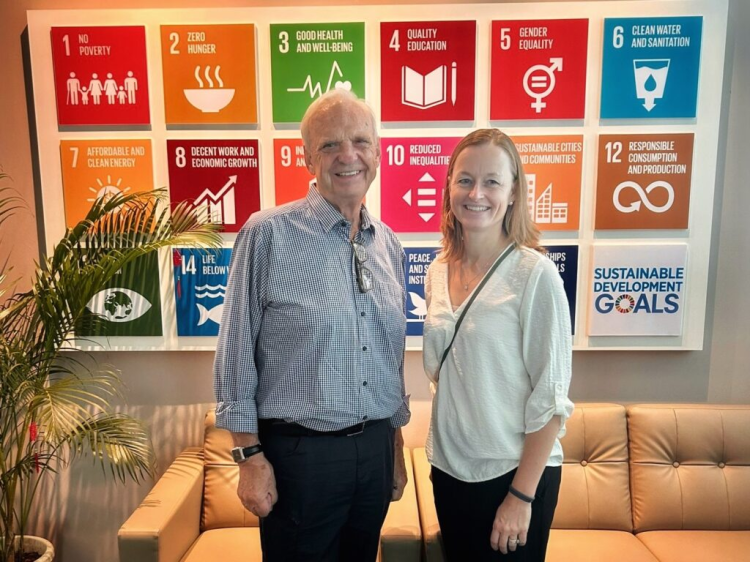
Charles Hopkins and Katrin Kohl
The resource's whole-institution recommendations connect areas including curriculum and learning, governance, operations, professional development and community engagement. It outlines 14 interconnected areas organizations across the world can use to assess and strengthen their sustainability efforts, from leadership and research to partnerships, communications and student services.
Examples highlighted in the guide include a Kenyan primary school that began as an effort to reduce waste and volved into a broader project involving students, educators, school leaders and community members. The initiative transformed a kitchen-waste problem into a school-wide project ties daily operations with teaching and learning.
Designed for educators, administrators and leaders, the resource helps identify priorities, plan action and monitor progress. It encourages institutions to consider practical questions, such as what sustainability means in different contexts, who will lead implementation and how success will be measured. The guide includes activities to help users set goals, map existing strengths and build systems for ongoing reflection and improvement.
Hopkins, Kohl and their collaborators used an action-research approach, bringing together educators, researchers and institutional leaders to test and refine the tool in real-world learning settings.
The resource builds on two previous guidance tools developed through UNESCO's Transforming Futures initiative that focus on pedagogies and competencies, and on assessing learning in EDS. Thee three resource development projects involved 41 educational organizations in 10 countries, including UNESCO Chairs, higher education institutions and members of the UNESCO Associated Schools Network.
"The launch of this new tool is an important milestone, but the real value of guidance comes through its use," says Hopkins. "The next step is for institutions to adapt the tools to their own contexts, learn from implementation and continue strengthening how ESD becomes part of everyday institutional practice."
Kohl adds, "When UNESCO publishes documents like this, they have the potential to become a standard document for most curricula at school and higher education level. This is the hope."
All three UNESCO guidance tools are available free of charge through the organization's Transforming Futures initiative.