Electricity markets need to respond to constant change including shifting weather conditions, price volatility and world events. The first Capital Power Energy Trading Competition, hosted by the University of Calgary's Haskayne School of Business, introduced students to these realities.
The Feb. 7 competition ran over six short trading rounds, giving the 51 participants repeated opportunities to test strategies, react to new information and learn from each shift in the market. Cash prizes were awarded to the top performers.
The event, held at Haskayne's trading lab, placed students in fast-moving scenarios. Working with power generated from solar, wind, hydro and hydrocarbon sources, they gained a practical look at how the electricity industry responds to change.
A simulation grounded in industry experience
Capital Power collaborated with Haskayne faculty to develop the scenarios and data used in the competition. The company provided insights from its real-time trading desk, helping shape simulations that reflect decisions traders make every day.
The design followed real trading patterns, said Alexandra Eremenko, a summer student with Capital Power, who supported scenario development. "Students start their shift at seven in the morning and end at seven in the evening in the simulation. While simplified, it comes very close to the structure and pace of an actual shift," she said.
The event's goal was to offer students a meaningful look at how real-time decisions unfold within energy markets and the type of thinking the industry requires, added Rafal Krzywicki, BComm'03, vice-president of Trading and Origination at Capital Power.
Industry perspectives highlight essential skills
Throughout the competition, Capital Power employees connected with students to offer guidance and share insight into their roles. Participants valued the chance to learn directly from professionals who work in fast-moving trading environments.
The experience exposed students to the unpredictability of the job, said Michael Rowbotham, BA'05, manager of Real Time Trading. "Just when you think you have figured it out, something changes. This gives students a feel for how quickly markets can shift," he said.
Krzywicki added that the competition is a helpful way to identify students with strong analytical and communication skills. "The students that are competing in the lab have gone through a lot of thought processes, a lot of sacrifices to be here; they want to be here," he said. "It's not just the money; they want to develop that skill set and showcase it."
Faculty insight strengthens experiential learning
An energy-focused event like this gives students the chance to work with concepts that behave differently from traditional financial assets, Dr. Alexander David, PhD, faculty lead for the competition, says in a post-event interview. Electricity markets respond directly to physical conditions like weather, operational limitations and demand patterns, he adds.
Alexander says the competition reflects Haskayne's commitment to experiential learning. Furthermore, "Capital Power provided perspectives on career paths, the profitability of the industry and skills that students should focus on more closely," which are invaluable pieces of information, he says.
Students navigate fast decisions, uncertainty and new tools
Competition winners were determined by ability to manage their portfolio and make profit across all three trading simulations, while managing supply, demand, news events impacting markets and transportation of goods. The scores came from their algorithm's ability to trade on their behalf, risk mitigation, profitable trades, controlled inventory/exposure, and used strategy across all cases.
Participants described the competition as an intense learning experience that pushed them to think differently than they do in coursework.
For business analytics student Paris Rizopoulos, the day demonstrated how sensitive markets can be to even small pieces of information. "It can influence the markets so much and you have to pay attention to either short the market or buy," he said.
Each student took away something valuable from the experience. Finance student Jon Hawkins saw his Python computer coding run for the first time, which he said relieved his pressure of trying something new.
Computer science and biological sciences student Bishesh Khanal shared that, "it was interesting getting to know how these external factors affect the market." He also noted that the open-ended format pushed him to rely more on instinct and adaptability.
Matthew Marchidan, another finance student, found the algorithmic market making case particularly competitive, since many participants were running strategies at the same time. And Master of Management student Marium Sheikh said the competition strengthened her interest in energy and finance, adding she valued the chance to explore unfamiliar challenges and learn more about potential career paths through conversations with Capital Power professionals.
Connecting students with Calgary's energy economy
The competition reflects Haskayne's commitment to offering applied-learning experiences that connect classroom concepts to industry practice. Capital Power's partnership supports hands-on learning that prepares students for future careers in energy, finance and analytics. The competition is expected to become an annual event.
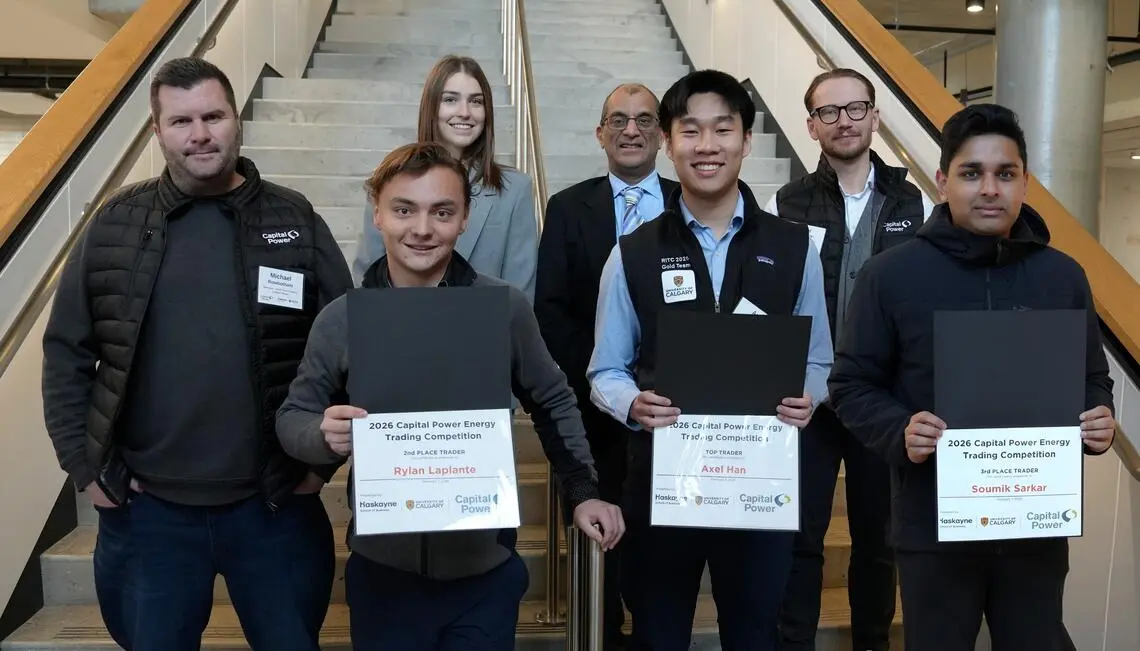
From left: Michael Rowbotham, Rylan Laplante, Alexandra Eremenko, Alexander David, Axel Han, Rafal Krzywicki and Soumik Sarkar. Photo Credit: Maheen Muzammil
Winners
Prizes were awarded to the top individual traders:
- 1st Place: Axel Han Kin Sang
- 2nd Place: Rylan Laplante
- 3rd Place: Soumik Sarkar
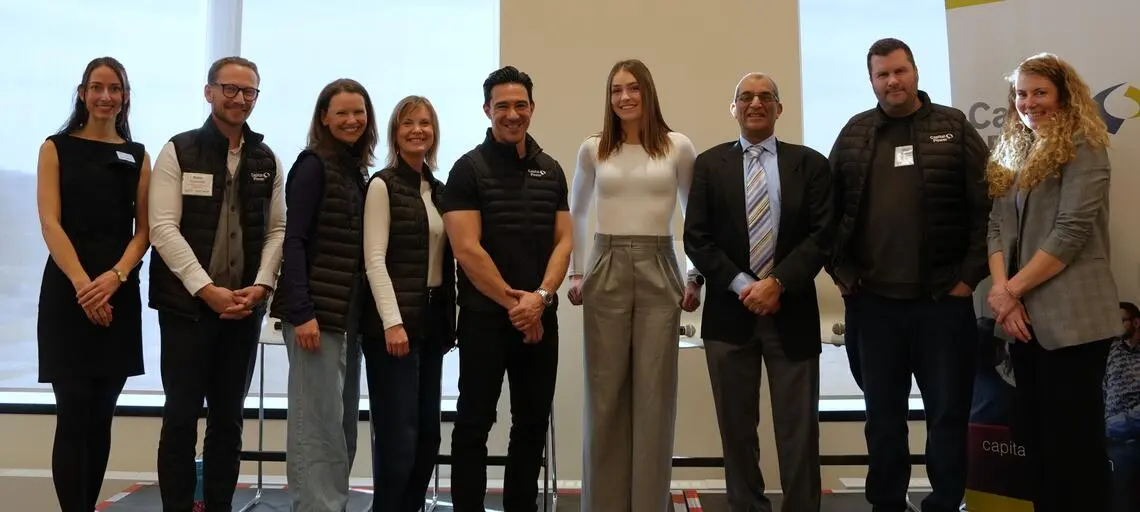
From left: Nicole Wagner, Rafal Krzywicki, Karin Hunter, Tricia Johnston, Jason Comandante, Alexandra Eremenko, David Alexander, Michael Rowbotham and Kathleen Gurski. Photo Credit: Maheen Muzammil