


As the days grow shorter and winter settles in, it's easy to forget the warmth and adventure of summer. But for Easton Hoisington, a second-year Fish, Wildlife and Recreation student at BCIT, memories of flying drones over BC's wild landscapes are still vivid.
Fieldwork that makes a difference
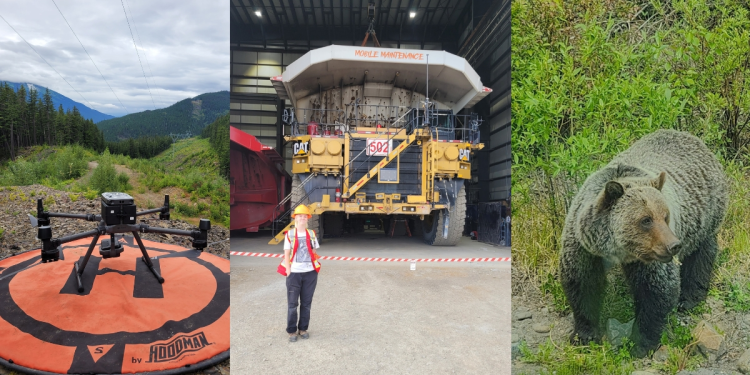
This past summer, Easton was invited by Fish, Wildlife and Recreation faculty, Justin Perry, to join him as an RPAS (Remotely Piloted Aircraft System) Pilot Assistant for Aeriosense Technologies. Together, they travelled to Iskut, Cape Scott, and Tumbler Ridge, using drone technology for utility inspections and forest management projects.
"We'd start early sometimes as early as 6 a.m. and spend the day driving to sites, flying drones, and collecting data," Easton explains. "I had no drone experience before this, but BCIT gave me the foundation I needed. Justin taught us about fire prevention and the potential of drones in forest management."
Justin adds perspective on how far the technology has come. He explains that about seven or eight years ago, only a handful of natural resource companies in the province were using drones. Today, nearly every consulting company has at least one. "Giving students the chance to work with this equipment helps them become more adaptable and ready for the workforce," he says.
The work was hands-on and challenging. Navigating old logging roads by ATV, braving rainy weather, and troubleshooting technology in the field became part of the daily routine. "Access was definitely the biggest challenge," Easton recalls. "Sometimes we had to take ATVs down roads, making sure we didn't get stuck. But that's what made it exciting."
Skills for today and tomorrow
Beyond technical skills, the experience taught valuable lessons in time management and adaptability. "You never know what the weather will be like in the mountains. Mornings were cold, days were hot. Having the right gear and being ready for anything was key," says Easton. "Time management is something I'll carry with me. We learn about it at BCIT, and it's so important in the field."
Justin reflects on the value of these experiences: "Real-life fieldwork is one of the best ways to learn, and Easton did a fantastic job. I know that through students like Easton, our lands, waters, and the life that inhabits them are in good hands."
Drone technology is transforming the way we manage forests and natural areas. "With drones, you can scan forests with Lidar, spot hot spots with infrared, and access places that would be dangerous or impossible on foot," Easton shares. "It's an up-and-coming technology that's making a real difference."
For anyone considering the Fish, Wildlife and Recreation program, Easton offers simple advice: "If you love nature and want to make a difference, this is the place to start. BCIT gives you the skills, the connections, and the opportunities to get out there and do meaningful work."
Learn more about the Fish, Wildlife, and Recreation program and discover how you can turn your passion for the outdoors into a career.
For more information

3700 Willingdon Avenue
Burnaby British Columbia
Canada V5G 3H2
www.bcit.ca/