The COVID-19 pandemic presented myriad challenges for health communicators, who struggled to reach everyone with accurate and timely information.
But new research by the University of the Fraser Valley's Dr. Cindy Jardine and Simon Fraser University's Dr. Aline Faria, highlights the critical role civil society organizations played, and how they can work with government to deliver more effective and culturally adapted messaging in a future health crisis.
"Because things were changing so quickly, there wasn't always the luxury of thinking about how you'd communicate to audiences with varying cultural backgrounds, and different access to information, often operating in different languages," said Cindy, a Tier 1 Canada Research Chair at UFV and a member of the Pacific Institute on Pathogens, Pandemics, and Society (PIPPS). "We couldn't always meet their needs and give them the information they needed to stay safe and continue trusting government policies and directives, so we wanted to explore how to do that better."
Two years ago, Cindy and Aline, a postdoctoral fellow at SFU, successfully applied for a Michael Smith Health Research B.C. Convening and Collaborating grant.
They began by compiling information on 36 civil society organizations that interacted with immigrant populations during the pandemic, then interviewed staff from several of those organizations.
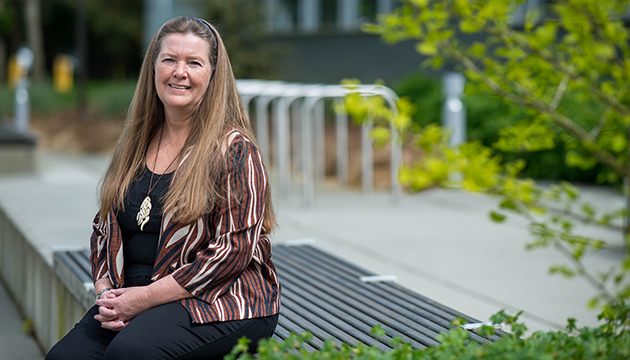
Dr. Cindy Jardine
On January 22 of this year, Cindy and Aline hosted an online convening event, Uniting Voices: Discussing Communications in Health Emergencies. The event brought together 42 government health communicators, civil society organizations, and researchers providing a space to share what they learned.
"We needed to share stories to understand what other people learned, and what worked," Cindy said.
The biggest lesson? Health communication doesn't always work with a one-size-fits-all approach.
Cindy and Aline repeatedly heard that immigrant populations were more likely to trust someone from their own community: most often a family member or a person with stature, someone who spoke their language and could understand their circumstances.
"For example, South Asian doctors got together, forming an alliance to deliver information to their communities," Cindy said. "They understood the language, the importance of integrating tailored messaging into places of worship, and other things that are important to that community, and they made great inroads improving immunization uptake."
Most of the organizations were volunteer-driven and offered essential assistance during the pandemic. Aline says they provided translation and transportation services and often offered necessities like food. That, she says, created opportunities to build trust, and then communicate health information.
The language barrier was a clear obstacle, but there were others that weren't so obvious.
For example, Cindy said the provincial government offered health information in several languages on their website.
"But when we pointed that out, people told us there was an assumption that they had access to the technology and/or ability to get on those websites," she explains. "Many households had one computer that was used for homeschooling and other things, and the person responsible for making family health decisions, often the mother, often had the lowest priority to access that computer and may not have been comfortable with the technology."
Cindy noted that many immigrants were working in public-facing jobs during the pandemic, increasing the likelihood that they'd bring the virus home to multi-generational households with elders.
"The risk was increased in ways they couldn't control, and it was hard for them to understand health messaging and even harder to act on it in ways that would protect their families properly," she said.
Aline said the project was rewarding because she was able to connect closely with people who were in the field during the pandemic and she learned a lot from them.
The lasting impact of Aline and Cindy's work will be stronger collaboration between government and civil society organizations to address these issues.
"Our work helped build the basis for a community of practice to create ongoing dialogue between those groups," Aline said. "Our primary goal with this project was to create bridges between these sectors, and help them to learn from each other, and discuss how we can improve health communication for immigrant populations in the future."
For more information

33844 King Road
Abbotsford British Columbia
Canada V2S 7M8
www.ufv.ca/