Brandon University is proud to announce that six of its graduate students have been awarded a 2026 Canada Graduate Scholarship for Master's students (CGS-M). The prestigious federal awards support high-achieving students at the start of their research careers, and are funded through Canada's three federal research granting agencies: the Canadian Institutes of Health Research (CIHR), the Natural Sciences and Engineering Research Council of Canada (NSERC), and the Social Sciences and Humanities Research Council (SSHRC). This year's BU recipients include one CIHR, two NSERC and three SSHRC awardees, and their projects range from breast cancer detection to mosquito repellents to the way social media shapes how we see climate change.
"These scholarships recognize students who are already asking bold questions and doing work that matters, in our labs, in our communities and well beyond Brandon," said Dr. Bernadette Ardelli, Vice-President (Research & Graduate Studies). "Our graduate students are at the heart of research at BU, and we are thrilled to see six of them recognized at the national level. On behalf of the whole university, congratulations to each of you."
CIHR
Vaishnavi Gopaul is studying breast cancer, with a focus on finding it earlier. Catching the disease early improves survival, and her lab is working toward a simple blood test that could do it. The lab has found tiny molecules called microRNAs that are common in aggressive breast cancers and help tumours spread to other parts of the body. Vaishnavi is looking at a related molecule called MYL6B, which also shows up at high levels in aggressive cancer cells. She will test whether blocking it can slow the spread of cancer, and whether it could become a new treatment target and an additional marker that doctors can look for in the blood.

Vaishnavi Gopaul, 2026 Canada Graduate Scholar
NSERC
Ayodele Adeniyi is working to solve a decades-old mystery: how does DEET, the world's most widely used insect repellent, actually work? Mosquito-borne diseases such as Dengue, Zika and Malaria still harm millions of people each year, yet scientists do not fully understand why mosquitoes avoid DEET. Recent research from the Cassone lab pointed to five genes in the Aedes aegypti mosquito that change when it is exposed to the repellent. Ayodele will use a safe gene-silencing method to switch those genes off in live mosquitoes and see whether they still react to DEET. The answers could help in developing stronger, longer-lasting repellents.
Danielle Isfeld is exploring how the tiny machines inside our cells get built. Ribosomes read our genetic instructions and make the proteins that every cell needs to function, and they depend on long strands of RNA being folded into precise shapes, much like origami. Scientists still do not know exactly how those folds are guided. Danielle is investigating how a protein called Emg1 and a group of small RNA molecules work together to fold the ribosome correctly, and how those helpers let go once the job is done.
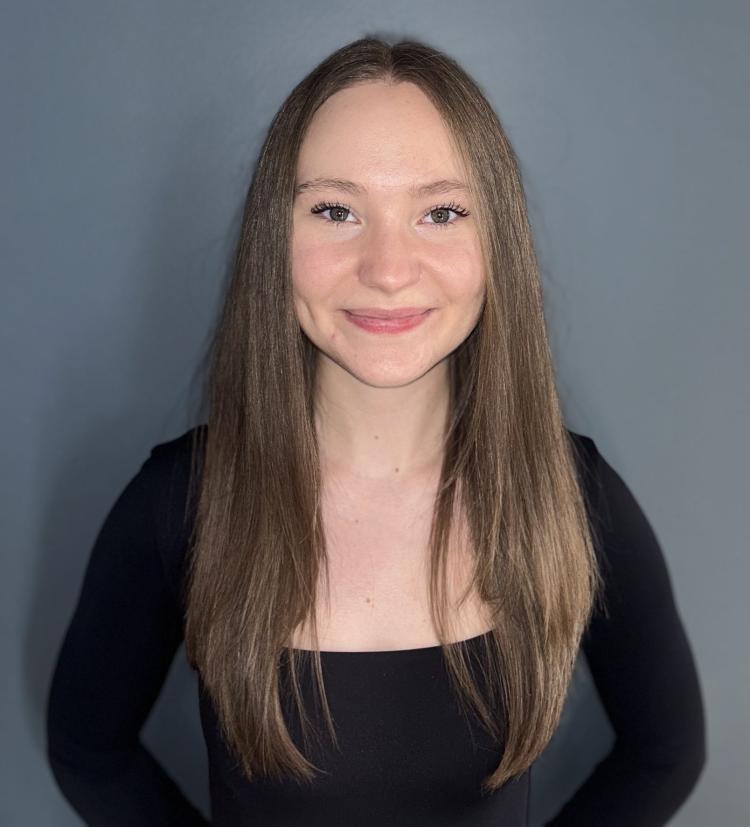
Danielle Isfeld, 2026 Canada Graduate Scholar
SSHRC
D'arcy Arseneau is looking at why mental health nurses stay in, or leave, rural communities. Rural northern Alberta struggles to keep enough of these nurses, which can limit people's access to care. Through interviews with 10 to 15 nurses who work in the region, D'arcy will explore how feeling connected to a community and a place shapes their decision to stay. The findings could help guide ways to support rural nurses and the communities that depend on them.
Katy Martin is using art to help people understand both climate change and the hidden algorithms that decide what we see online. Her project will build immersive "information domes" that mimic social media echo chambers, giving participants the chance to "walk into" someone else's feed and feel how the extractive logic of the machine is causing polarization and a crisis of knowledge and truth. A community-built data mural will offer a counterpoint. Using the art installation as a provocation, Katy and her participants hope to develop a new way of teaching that helps students recognize and push back against the ways digital systems shape what they believe, while giving educators and communities creative tools to build climate and information literacy.
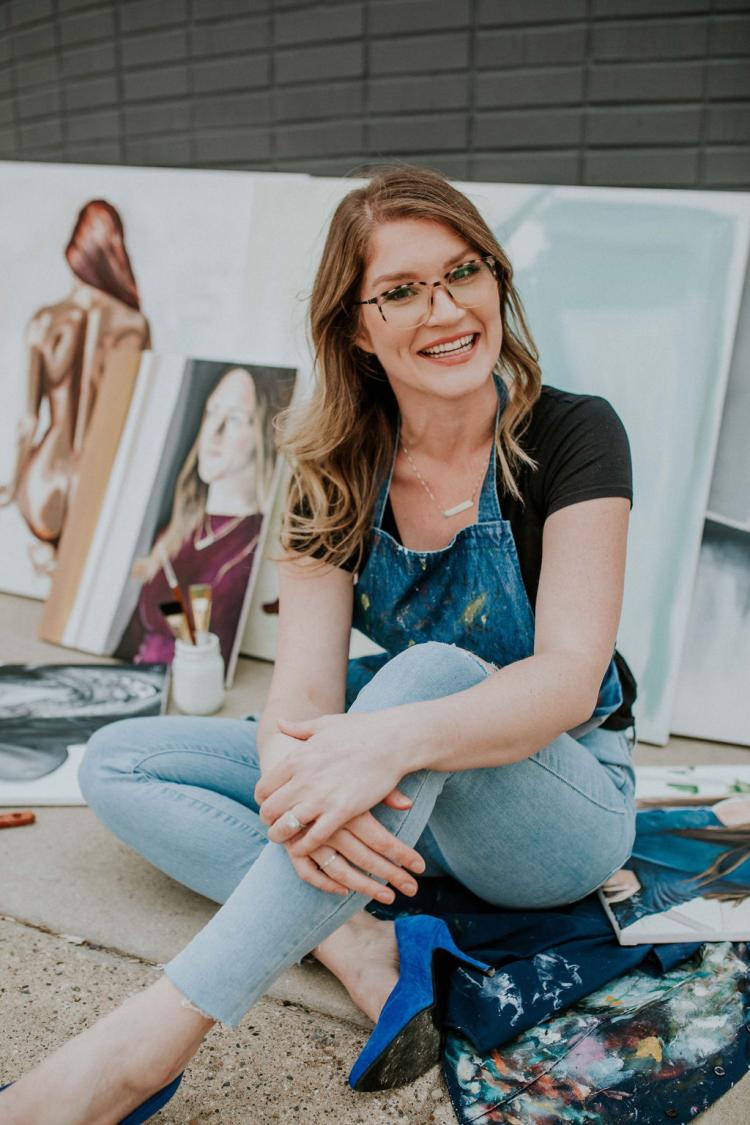
Katy Martin, 2026 Canada Graduate Scholar
Alexandra Skelton is studying how writing helps students learn, and why it may work differently for students with ADHD. Students with and without ADHD will complete a short writing task in Brandon University's Writing-brain Laboratory while a small sensor measures changes in skin sweat, a sign of stress or alertness. Alexandra will then look for differences in learning by comparing patterns in the students' writing and stress signals. Her goal is to better understand the mechanisms of ADHD, and how stress and writing connect to learning, so that writing activities can be better matched to the way different students learn.
Brandon University congratulates all six recipients on this well-deserved achievement.