A University of Windsor engineering professor whose research protects connected and autonomous vehicles from cyberattack has been named a 2026 Killam NRC Paul Corkum Fellow one of the most prestigious research honours in Canada.
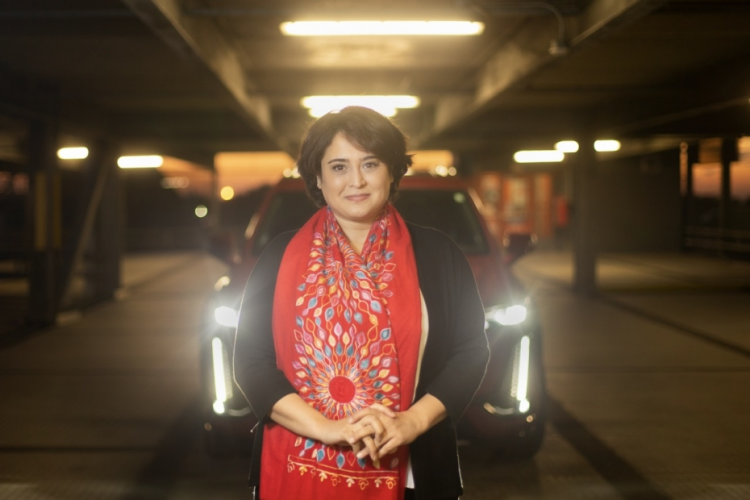
Dr. Mitra Mirhassani studies how the connected systems in modern vehicles can be hacked and how to stop it. That work has earned the University of Windsor professor one of Canada's most prestigious research honours, the 2026 Killam NRC Paul Corkum Fellowship. (FILE/University of Windsor)
Dr. Mitra Mirhassani is the first researcher from the University of Windsor to receive the award, which is granted to up to three scholars annually by the National Research Council of Canada (NRC) in recognition of work with the potential to make a significant national or global impact. The fellowship is valued at up to $150,000 and provides access to NRC researchers, laboratories and infrastructure.
"Recognition through the Killam NRC Paul Corkum Fellowship places Dr. Mirhassani among an exceptional group of scholars shaping the future of discovery," says Dr. Shanthi Johnson, vice-president, research and innovation at the University of Windsor. "Her leadership in automotive cybersecurity reflects the strength of research at the University of Windsor at the national stage and advances vital work to strengthen the safety, resilience, and trust in the technologies that power our everyday lives, locally and globally."
Mirhassani is the co-founder and director of the SHIELD Automotive Cybersecurity Centre of Excellence the only centre of its kind in Canada dedicated to end-to-end automotive cybersecurity. Her work focuses on how the sensors, hardware and wireless systems in modern vehicles can be exploited, and how to prevent it.
"From auto theft to the theft of personal information, or even malfunctioning sensors problems can arise when systems don't work properly, which could result in accidents," says Mirhassani. "You carry your loved ones in the car, so you want to ensure the best safety and security around your vehicle."
Under the fellowship, Mirhassani will collaborate with NRC researcher Taufiq Rahman on a project titled "Strengthening autonomous systems through real-time defences." The work will be conducted in part at NRC's laboratory in London, Ont., where researchers can simulate and study real-world cyberattack scenarios on autonomous vehicle sensors and LiDAR light detection and ranging systems.
"This will not just benefit my own research or lab but will be beneficial to everyone doing research on this topic," she says.
"The 2026 Killam Laureates exemplify research excellence that will help in the building of Canada's future," says Bernard F. Miller, KC, Managing Trustee, Killam Trusts. "Their research supports innovation, advances learning and knowledge, and encourages understanding and collaboration all of which will strengthen the future well-being of Canada and Canadians."
Mirhassani completed her MASc and PhD at the University of Windsor and joined the faculty in 2008. Her pivot into automotive cybersecurity came after early work in neuromorphic engineering revealed a significant gap: very few organizations were examining hardware security in vehicles. That finding led to the creation of SHIELD, which examines vulnerabilities across the full automotive ecosystem vehicle hardware and software, supply chains, cloud connectivity and EV charging infrastructure.
"I'm very honoured by this recognition," says Mirhassani. "It's a nice vote of confidence and I hope it's the first of many for our research community here at Windsor."