A Kwantlen Polytechnic University (KPU) symposium exploring Indigenous medicine and Traditional Chinese Medicine (TCM) will offer students and the wider community a unique glimpse of how diverse healing practices are linked.
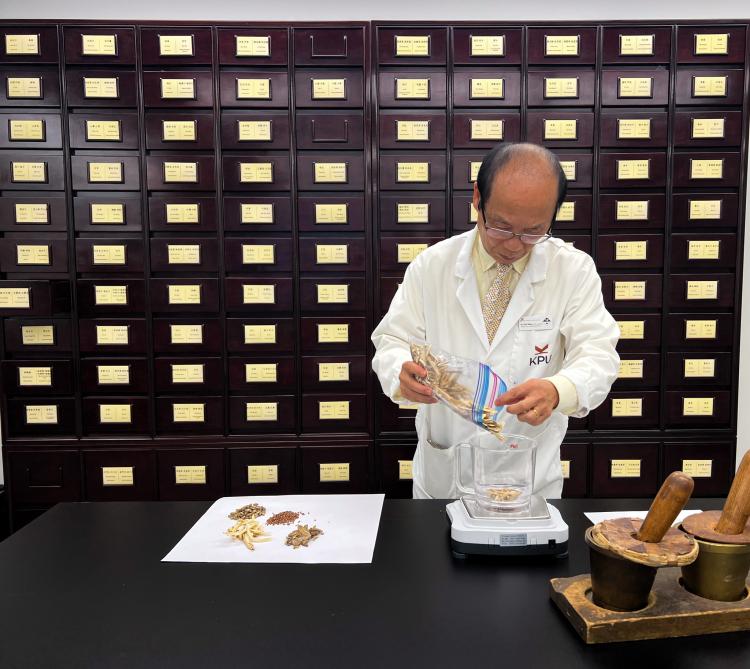
Dr. John Yang, TCM department chair, inside the herbal dispensary at KPU.
"While there have been discussions on traditional and integrative medicine, events specifically focused on dialogue between Indigenous healing and TCM are still quite rare. This symposium helps open that conversation," says Dr. John Yang, TCM department chair at KPU and symposium chair.
Pathways of Healing: Indigenous Medicine and Traditional Chinese Medicine Perspectives will bring together practitioners, scholars and community leaders for conversations on how ancient healing practices inform modern health and wellness.
"The symposium aims to create a respectful and collaborative space for dialogue between Indigenous healing knowledge and TCM. The goal is to foster mutual learning, cultural humility and relationship-building by exploring how different healing traditions understand wellness, community and holistic care," says Yang.
The symposium responds to the Truth and Reconciliation Commission of Canada's Calls to Action by recognizing Indigenous knowledge systems as valuable and living health traditions.
"Both healing traditions focus on whole-person wellness and the connection between body, mind, spirit, community and environment. There is growing recognition that different healing approaches can work alongside modern health care when practiced respectfully and collaboratively."
Two keynote talks will set the stage for the symposium. Indigenous medicine practitioner Georgina Hnatiuk will speak on the foundations of Indigenous healing practices. A second talk will feature TCM practitioner Dr. Henry Hung, who will share principles of TCM: healing philosophy, herbs and acupuncture.
Four panel discussions will follow: Indigenous and TCM ways of knowing; respect, reciprocity and responsibility in cross-cultural healing; from disease treatment to whole-person healing; and community members' voices.
KPU students are supporting the event in planning and coordination -- providing them with unique lessons outside the classroom.
"Students gain exposure to diverse healing perspectives, learn about cultural respect in health care and develop a deeper understanding of holistic and community-focused wellness," says Yang.
Meaghan Mc Aneeley, a TCM student at KPU, says she's happy to see the TCM department proactively cultivating bonds of allyship with Indigenous communities.
"What could be more valuable than wisdom carefully gathered and transmitted from generation to generation, reaching back thousands of years? It's the foundation of all modern knowledge, the basis of human survival and the root of human identity. I feel strongly about engaging with traditional knowledges and keeping them alive so they are not lost, which is one reason I decided to study TCM."
To Mc Aneeley, supporting and respecting Indigenous communities is important, and she's proud to see space being made for Indigenous knowledge and practice in health care.
"I'm grateful to study within a department that holds these values, and I know it will be an incredible privilege to learn from the speakers at the symposium," says Mc Aneeley.
The Faculty of Health at KPU offers two TCM programs: the Bachelor of Traditional Chinese Medicine and the Diploma in Traditional Chinese Medicine - Acupuncture.
The Ministry of Health recently reinforced its support for TCM and acupuncture as important health professions in B.C., clarifying that activities related to Chinese herbal remedies are limited to professionals trained and licensed to be TCM doctors, practitioners and herbalists.
The Pathways of Healing symposium takes place Saturday, March 14 from 8:30 a.m. to 3:30 p.m. at KPU Richmond, 8771 Lansdowne Rd. Attendance is free with registration, and the event is open to everyone, including TCM practitioners and students, Indigenous community members and health care professionals. Registration is first-come, first-served, and open until March 10.