Mukherjee, an associate professor of medicine, is a 2026 Falling Walls Winner in the Women's Impact Award category and a Science Breakthrough of the Year winner for her work, "Breaking the Wall of Long COVID Denial: With Immunology, Not Opinion."
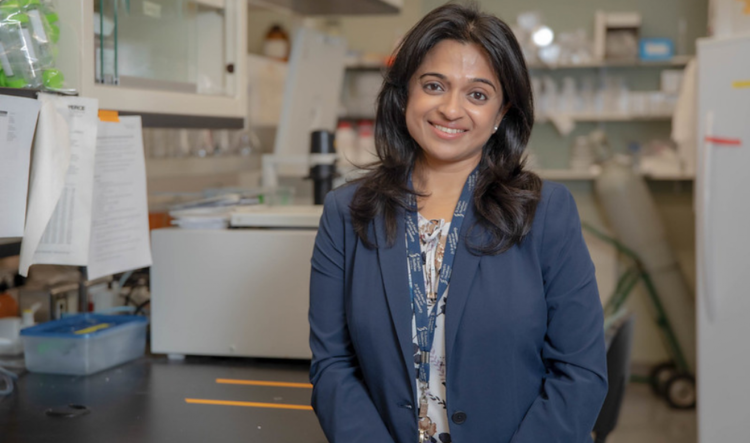
The societal and institutional fatigue linked to the pandemic has curtailed research around the long-term impacts of COVID-19 on patients, some of whom developed autoimmune diseases after being perfectly healthy prior to their illness, said Mukherjee, who is also the AstraZeneca Chair in Respiratory Diseases.
"The only fatigue that should be associated with Long COVID is the fatigue of the people who are suffering from it," said Mukherjee.
"That's the fatigue we should be addressing. There should not be fatigue in policymakers or those responsible for funding and conducting research."
Mukherjee's work in the Lung Autoimmunity and Biomarkers Laboratory at McMaster focuses on understanding why recovery after COVID-19 differs so profoundly from one person to another, and on identifying patients who need closer monitoring before they develop a potentially life-changing illness.
In a study published in the European Respiratory Journal, her team found that COVID-19 survivors who still carried antinuclear autoantibodies a year after infection were more likely to have persistent symptoms, including fatigue and breathlessness, along with ongoing inflammation.
Her lab is now working toward a simple blood-based approach that would help clinicians decide who needs closer follow-up or earlier referral.
About three-quarters of the people in her research cohort are women, a group whose Long COVID symptoms, Mukherjee says, are too often dismissed as anxiety.
"With every infection and reinfection, your chances of pushing your body toward Long COVID increase, and once you have Long COVID, your chances of getting a chronic disease increase," said Mukherjee.
"That subsequently leads to more pressure on our health-care systems as those people who develop new diseases need medical intervention. We cannot prepare for something like that if we don't accept there is a problem in the first place."
Statistics Canada estimates that about 3.5 million Canadian adults, roughly one in nine, have experienced long-term symptoms after COVID-19, and that more than half of them were still living with those symptoms in mid-2023.
Medicine has met this pattern before. After SARS reached Toronto in 2003, a group of survivors, most of them health-care workers, were still unable to return to their jobs one to three years later, with persistent fatigue, pain and disrupted sleep.
Rheumatic fever, an autoimmune reaction that can follow strep throat, became largely preventable once physicians understood it as a delayed immune response to infection and learned to treat the infection early.
And it took blood samples banked from more than 10 million U.S. military personnel to show, in 2022, that Epstein-Barr virus raises the risk of multiple sclerosis 32-fold, a disease that typically appears about a decade after infection.
In each case, the answer came from following people for years and measuring their biology, rather than waiting for chronic disease to declare itself.
That, Mukherjee argues, is the work Long COVID now needs.
In addition to a talk about her work at the international Falling Walls Summit, Mukherjee is part of a panel discussion called "Communicating Research with Policymakers" about shifting Long COVID policy and funding narratives from fatigue to precision-medicine evidence.
More than 2,000 scientists, policymakers and university leaders from more than 100 countries will gather to discuss pressing global issues at the Falling Walls Science Summit in Berlin, Nov. 6-9.
Canada is the partner country for the summit, with a high-level delegation of leaders from academia, industry and government.
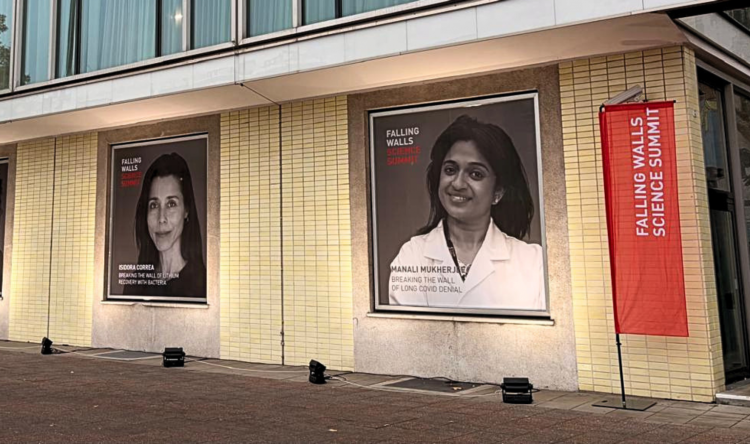
In addition to a talk about her work at this international forum, Mukherjee is part of a panel discussion called "Communicating Research with Policymakers" about shifting Long COVID policy and funding narratives from fatigue to precision-medicine evidence.
Mukherjee said she hopes the platform the award gives her will help her communicate the urgency of addressing Long COVID to those in decision-making positions.
"One of the things this research has taught me is that we need to unlearn what we have already learned to truly practice the art of being unbiased," said Mukherjee.
"With COVID, there is no one size fits all'. Everyone's immune system is different, and we need to treat everyone differently."
Mukherjee knows this first-hand. She developed Long COVID after contracting the virus during the pandemic.
While her symptoms weren't as severe as those of some participants in her research cohort, including those who developed autoimmune diseases like lupus and vitiligo, she believes that personal connection has helped her be a voice for those who are searching for answers.
"You get a different perspective when you're suffering from it yourself, and I believe that it made me a better researcher in how I design my studies," said Mukherjee.
"Now, even in my current research on asthma and other chronic diseases, I put some of those principles that I learned because of Long COVID research into practice, including paying attention to patient-reported outcomes. Symptoms don't lie."