




Long before Lahoma Thomas became a scholar, she was a child sitting beside her grandmother in the Caribbean, surrounded by women talking about their lives, their communities and the challenges they faced.
Those shared stories - layered with histories of resistance, survival and community - were her earliest lessons in listening, and the questions they raised would later shape her academic work.
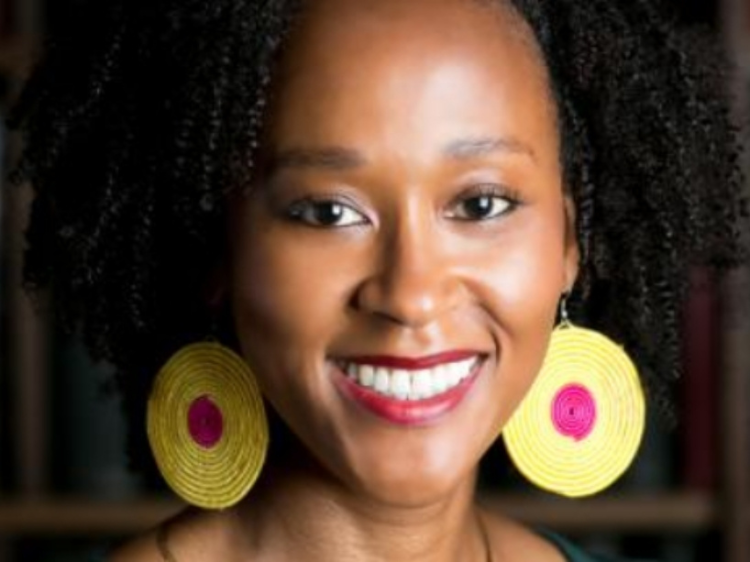
Now a professor in TMU's Department of Criminology, Thomas studies the political insights and everyday experiences of Black women in Jamaica - work that has earned her international recognition.
Thomas has won the 2025 Early Career Researcher First Book Prize from Oxford University Press - and she's the only Canadian to receive it. The prize supports scholars working on their first academic book within six years of completing a PhD or first academic appointment.
Her upcoming book, Black Women and the Politics of Respect in Jamaica: "Seeing from Da Yaad," expected in 2027, looks at how women in Kingston's inner-city communities navigate political authority, state power and dignity.
For Thomas, winning this prize early in her career is especially meaningful.
"It reflects confidence in the questions the book brings to the study of political life," she says. "It affirms the importance of understanding Black political life not only through formal institutions, but through everyday relationships and practices that often go unseen."
Rooted in the Caribbean
Thomas's research is grounded in her own connections to the region. She has long seen the Caribbean not just as a place, but as a powerful site of political thought.
"I have familial ties to the Caribbean, and I have long understood the region as a critical and radical intellectual space," she says.
Caribbean scholars and activists have contributed to major intellectual movements - from postcolonial thought to Marxist critique, critical race theory and feminist scholarship. Despite this, Thomas says the region is often overlooked in mainstream political science. Her book, and broader research, aims to change this.
A protest that raised bigger questions
The central questions of Thomas's research took shape around a real event.
In 2010, thousands of women in Kingston marched through the streets dressed in white. They were protesting the extradition of Christopher "Dudus" Coke - a powerful gang leader - to the U.S. to face charges. To many observers, the protest was hard to understand: Why would residents defend someone connected to criminal activity?
For Thomas, the protest pointed to something deeper.
Political science typically explains community support for criminal organizations through coercion or material gain. But when Thomas did her research in Kingston's garrisons, she found a more complex story.
Many women she spoke with said their decisions were shaped not just by survival, but by dignity.
Through this example, Thomas shows us that her work seeks to understand how people make political decisions in places shaped by histories of colonial and racialized violence, inequality and uneven state power.
Her book argues that when women support certain leaders of criminal organizations, it often reflects their own judgments about what makes authority legitimate - judgments shaped by everyday experiences of respect.
"This project is a refusal of narratives that reduce Black communities to sites of crime," Thomas says. "It listens to how people themselves understand political life."
A career built on listening
Thomas has always been interested in women's experiences, exploring how their lives are influenced by various state systems and their acts of resistance against these pressures. For Thomas, "when coupled with action, listening to those who are otherwise not heard, centring those perspectives and voices is a way to enact change."
Before academia, she worked as a social worker supporting survivors of sexual violence. Her earlier research looked at gender-based violence in post-conflict Northern Uganda.
Through all of it, one question kept coming up: How do women make life livable in difficult circumstances?
"I've always been interested in how women navigate violence and uncertainty," she says. "How they create possibilities for survival and dignity in conditions not of their own making."
The practice of listening, first shaped by family stories and later by her professional work, remains central to her research today.
Mentorship and what's next
Thomas credits mentors who encouraged her to trust her instincts as a researcher.
During her PhD at the University of Toronto, she worked with the late political scientist Lee Ann Fujii, whose encouragement was vital in shaping the project. Following Fujii's passing, political theorist Joseph Carens provided the steady guidance and support needed to bring the dissertation to completion. The project was further enriched by the mentorship of Alissa Trotz, whose insights helped ground its engagement with Caribbean intellectual traditions.
"My mentors encouraged me to trust my own voice," Thomas says.
Now at TMU, she hopes to offer that same support to students exploring new questions and perspectives.
With her 2027 publication date approaching, Thomas hopes it will spark broader conversations about whose perspectives shape how we understand political life.
"I hope it encourages people to take the Caribbean seriously as a site of political thought," she says. "And to listen more closely to how people themselves understand authority, dignity and survival."


