




Grenfell Campus researchers conducting fieldwork in remote and challenging environments will soon have access to enhanced safety training, thanks to an investment from the Hebron Project.
An education and training expenditure of $893,750 will support the development and initial offering of the Grenfell Field Research Safety Training (G-FRST) program, an initiative designed by
Dr. Stephen Decker (BA'04, MA'07), an associate professor in the School of Science and the Environment.
The G-FRST program will help researchers identify and better understand the hazards associated with fieldwork while equipping them with the knowledge and practical skills needed to reduce risks and conduct research more safely.
The program combines information delivered in the classroom with an outside/in-field demonstration and performance teaching approach to ensure that students enrolled in the program gain hands-on experience in the outdoor settings in question.
"This unique training program is more than a course," said Dr. Rod Russell, interim vice-president (research and innovation). "It's an opportunity for Memorial University researchers and students to become national leaders in developing innovative field research safety practices while aligning that work with other research-intensive institutions across Canada. Thanks to the Hebron Project for this important investment to help keep our researchers safe for years to come."
About the program
The program will begin with a comprehensive assessment of the types of field research activities undertaken at Grenfell Campus.
Project leaders will work closely with faculty members who supervise field research to identify potential hazards and determine the training and certifications to safely undertake a wide range of activities.
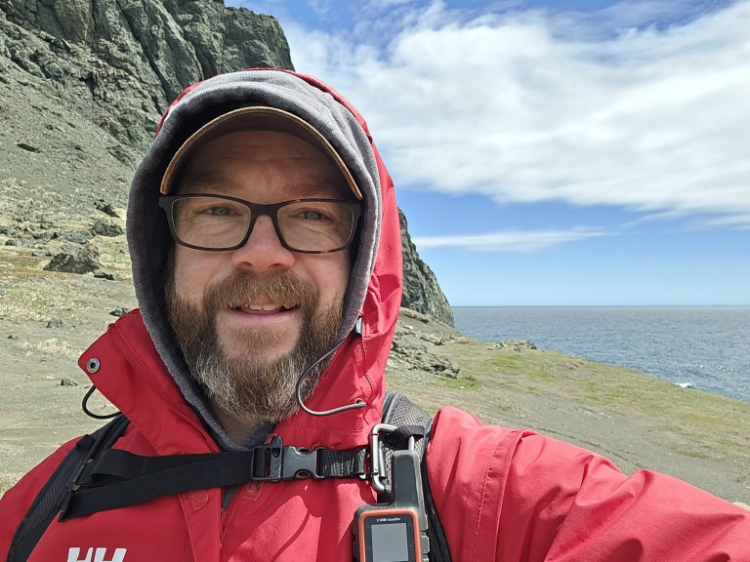
Dr. Stephen Decker says G-FRST offerings will range from standard first aid training and vehicle safety awareness to agreements for more intensive modules focused on wilderness survival, remote navigation and communications, wildlife safety and advanced first aid. Photo: Submitted
Dr. Decker says researchers operating in Newfoundland and Labrador face a number of inherent risks, ranging from vehicle breakdowns, severe weather, challenging wilderness navigation, lost persons to cold-water immersion, wildlife encounters and limited access to and communications with emergency services.
"The training program will be designed to increase awareness of these hazards while providing practical strategies to mitigate risk," he said.
With more than 1,000 undergraduate and graduate students from all over the world enrolled in 15 undergraduate and eight graduate programs at Grenfell Campus, the G-FRST program will help ensure researchers are prepared to conduct fieldwork safely regardless of their previous experience.
Dr. Decker says some students and field researchers have limited experience operating in remote and wilderness settings and are sometimes operating in landscapes and climates that differ considerably from what they have been exposed to at their home institutions or in previous field sites.
"This investment from the Hebron Project provides Grenfell Campus with an opportunity to build a culture of safety while supporting the work of researchers in the field, providing them with the training to identify and mitigate risks and allowing them to focus on safe and effective data collection," he said.
Training through the G-FRST program will be tailored to specific activities; for example, risks associated with researchers travelling by vehicle on paved roads would be lower than those travelling to and from remote field sites.
G-FRST offerings will range from standard first aid training and vehicle safety awareness to agreements for more intensive modules focused on wilderness survival, remote navigation and communications, wildlife safety and advanced first aid.
The program will also establish standardized documentation, agreements and safety guidelines for research supervisors to identify risks and ensure their researchers have completed relevant training before conducting fieldwork.
Long-term vision
Following an initial pilot phase, project leaders will evaluate and refine the program to establish G-FRST content and guidelines for consideration as a formal Memorial policy governing field research.
"We hope . . . that Grenfell Campus will be seen as a destination for those seeking to enhance field research safety in their operations." Dr. Stephen Decker
If adopted university-wide, it would help ensure consistent safety standards across field-based research activities.
Dr. Decker says the long-term vision includes expanding the program beyond Memorial to support government agencies, industry partners and other organizations with employees working in remote environments.
"We hope that the G-FRST program will evolve into a sustainable field research safety institute and that Grenfell Campus will be seen as a destination for those seeking to enhance field research safety in their operations."
For more information

230 Elizabeth Avenue
St. John's Newfoundland
Canada A1C 5S7
www.mun.ca


