




As a Memorial University graduate student and a manager of health services with Nova Scotia Health, Eric Newson is bringing Memorial's nursing research directly into practice within his home province's health-care system.
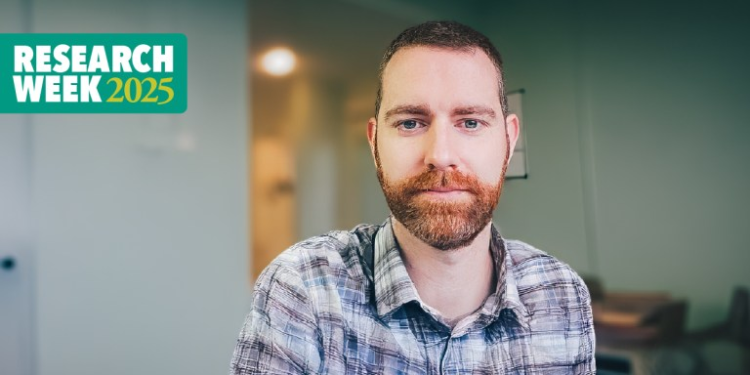
Eric Newson's master's research focuses on the barriers and challenges nurses should be aware of while providing palliative care to adults experiencing homelessness. Photo: Submitted
Drawing on his 15 years of frontline health-care experience, Mr. Newson's master of science in nursing research is focused on a growing challenge across Canada: how to support people who are homeless or living in unstable housing at the end of life.
It has also guided the development of a new e-learning module that helps nurses better understand and address the barriers these patients face.
Read on to learn more about how the Memorial graduate student's program has helped him advance "good ideas" in his workplace and he has found that members of the unhoused population face numerous barriers to palliative care, not just financial ones.
KB: Briefly tell us about your research journey and how you became involved in this area.
EH: While studying at Memorial, I have been working full-time as a registered nurse in oncology and palliative care, and I enjoy aligning my school projects with real challenges from work.
The Master of Science in Nursing Program taught me how to research a problem, critically appraise the evidence and articulate a solution to my organization.
I found that research is key to moving projects forward because it strengthens your proposal.
Good ideas may lose momentum, but evidence-informed ideas tend to gain traction.
KB: In one sentence, what is the most important question your work addresses?
EN: What barriers and challenges should nurses be aware of while providing palliative care to adults experiencing homelessness or vulnerable housing, and what strategies could help them address these barriers and challenges?
KB: What is the value or impact of your research?
EN: This research challenges the misconception that the unhoused population is only unique because of their financial needs.
A thorough review of the evidence found that there are unique clinical, social and psychological factors that make it difficult for this population to access palliative care services.
"This work will teach nurses how they can adapt palliative care services to support patients experiencing homelessness or vulnerable housing."
The research informed a new e-learning module that teaches palliative care nurses about the barriers and nursing strategies to support the patients.
KB: How do Canadians or communities benefit from this work?
EN: Canadians are experiencing a housing crisis and high cost of living, and the health-care system needs to adapt its services to address the needs of the public.
This work will teach nurses how they can adapt palliative care services to support patients experiencing homelessness or vulnerable housing.
KB: What motivates or inspires you in your research practice?
EN: I have worked as a health-care professional in Nova Scotia for 15 years, and I am inspired by organizations that promote a culture of continuous improvement.
The Canadian health-care system has a lot to be proud of, but I don't think we will ever get to a point where we stop trying to make it better.
In my experience, research drives health-care transformation, which is motivation to keep doing more research.
For more information

230 Elizabeth Avenue
St. John's Newfoundland
Canada A1C 5S7
www.mun.ca


