




Brandon University is celebrating new research that points to a natural way to help prevent cyanobacteria harmful algal blooms (CHABs) from taking over lakes, ponds, and streams.
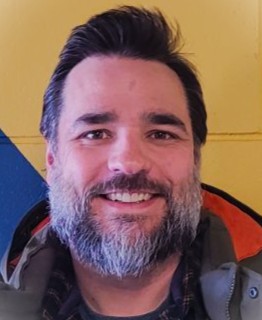
The study, led by Dr. Barry Madison from BU's Department of Biology and published as the cover article in a special Marine and Freshwater Toxins issue of the journal Toxins (Volume 17, Issue 11, November 2025), looks at an Asian freshwater snail from the Viviparidae family called Sinotaia aeruginosa. These snails as part of a larger group of common aquatic gastropods (e.g., Bellamya, Sinotaia, and Viviparus) who feed by filtering tiny particles from the water, and Dr. Madison's research shows they can also trap and remove the harmful algae Microcystis, which is responsible for toxic blue-green blooms that affect water quality across Canada and around the world.
Algal blooms can make water unsafe for swimming, kill fish and wildlife, and threaten drinking-water supplies. They have become more frequent as temperatures rise and nutrients and fertilizers wash into lakes and rivers. Dr. Madison's work suggests that natural filter-feeding animals could play an effective role in slowing the establishment of colony-forming cyanobacteria that are responsible for creating blooms before they grow too large - and dangerous.
"Our freshwater resources are under immense pressure, and toxic algae blooms are becoming increasingly more common," said Dr. Madison. "What we found is that these common snails naturally filter algae into small pellets which can then be ingested by the snails or encapsulated as pseudofaeces. This means once the algae has been processed by the snail there is less opportunity for colony-forming Microcystis to aggregate into blooms. This effectively delays creation of CHABs during ideal bloom-forming conditions, giving the ecosystem, and people working to protect it, more time before a bloom becomes dangerous. It's a simple biological control process that when scaled appropriately, has big potential. For example, if a single 3 g snail can filter a couple litres of water in just few hours, just imagine what several thousand could do, and they can also be harvested for food!"
The research shows that the snails are especially effective at controlling algae that form colonies, which are the types most linked to harmful blooms. While snails alone won't solve the eutrophication problem, the findings highlight a promising nature-based tool to support other water-protection efforts.
Dr. Chris LeMoine, Dean of Science at Brandon University, says the work shows how basic biology can lead to practical solutions. "This research is a great example of how studying natural systems can help us face modern environmental challenges," he said. "Using species already present in freshwater ecosystems is a creative and sustainable way to support water health."
Dr. Bernadette Ardelli, Vice-President (Research & Graduate Studies), praised the study as an important contribution to environmental science coming from BU. "We are proud of Dr. Madison's work and its real-world impact," she said. "Protecting water is essential to communities and ecosystems, and this research adds valuable knowledge to efforts happening across Canada and globally."
Brandon University continues to support research that strengthens environmental resilience and improves life in the Prairies and beyond.
The paper can be read here: https://www.mdpi.com/2072-6651/17/11/536


