




Research from Western University law professors was instrumental in a landmark Supreme Court of Canada decision creating a new civil wrong for intimate partner violence. Several of Western's Tort Law Research Group (TLRG) scholars were cited in the Supreme Court of Canada's landmark decision in Ahluwalia v Ahluwalia, 2026 SCC 16.
A tort is a distinct civil wrong for which individuals can sue. The Supreme Court's latest decision creates a new avenue for civil claims based on intimate partner violence. Previously, victims were limited to claims based on existing torts of assault, battery or infliction of emotional distress, which did not necessarily capture the cumulative harms caused by patterns of coercive control.
"I think it's important the court recognized the social reality and highly gendered nature of intimate partner violence," said Western law professor Erika Chamberlain, co-director of TLRG.
Plaintiffs can now bring civil claims that better reflect how a partner's controlling behaviour affected their ability to make fundamental decisions about their own lives, and may receive greater compensation as a result.
The case that landed before the Supreme Court arose from a divorce proceeding in which a woman disclosed years of abuse by her husband. Along with incidents of physical violence, the evidence included conduct designed to demean, isolate and control, including financial threats, psychological manipulation and behaviour that undermined the woman's dignity and equality within the relationship.
The landmark decision
Legal experts were split on whether the case showed the need for a new tort to capture the specific realities of intimate partner violence. The trial judge concluded intimate partner abuse often consists of a sustained pattern of behaviour and recognized a new tort of family violence to reflect that reality.
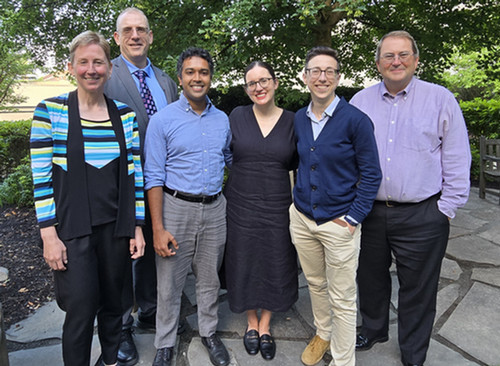
Members of Western's Tort Law Research Group. (L to R) Professors Erika Chamberlain, Jason Neyers, Manish Oza, Joanna Langille, Zoe Sinel and Stephen Pitel. (Submitted)
The Court of Appeal for Ontario disagreed and found that existing torts sufficiently captured the harm. The case was then appealed to the Supreme Court.
In the majority decision written by Justice Nicholas Kasirer, the Supreme Court cited more authors from Western Law than from any other law school, referring to articles and book chapters on tort law theory by professors Andrew Botterell, Stephen Pitel and the late Gerald Fridman. Also, the court referenced leading tort texts co-written by TLRG members and co-edited by Pitel and Chamberlain.
The ruling further cited a family law casebook co-authored by professor Claire Houston and a collection co-edited by professor Melanie Randall. Both the majority and dissenting opinions referred to Fridman's scholarship on common law methodology and the creation of new torts - a central issue in the case.
"Western Law has a very strong and diverse group of tort scholars," Chamberlain said. "It's great to see so much of our work helping the court navigate such a landmark case."
Beyond the court ruling
Members of Western's TLRG have since written about the case for a special issue of the periodical Canadian Cases on the Law of Torts. Chamberlain's commentary, When the Facts Cry Out for a Remedy: Ahluwalia's Framework for Recognizing New Torts, examines the idea that a new tort may be justified where the defendant commits a wrong that infringes the plaintiff's interests and where existing law does not provide an adequate remedy.
Chamberlain suggests the decision reflects a greater willingness by courts to recognize new torts than has traditionally been the case.
"I tend to be cautious about creating new labels for wrongful conduct when existing law may already cover the field, but in this case, I think the majority has identified a legitimate gap in the law," Chamberlain said.
A second commentary by Pitel and Randall, The New Tort of Intimate Partner Violence: Definitional Difficulties, examines the scope and terminology of the new tort. The third commentary, Everything Old is New Again: Corrective Justice and Rights in Ahluwalia v. Ahluwalia by Botterell, Jason Neyers and Zoë Sinel examines the court's understanding of corrective justice.
Learn more about how Western is navigating new realities.


