


An instructor-student research team at Lethbridge Polytechnic has published findings on optimized leisure and recreational activities for older adults with moderate dementia.
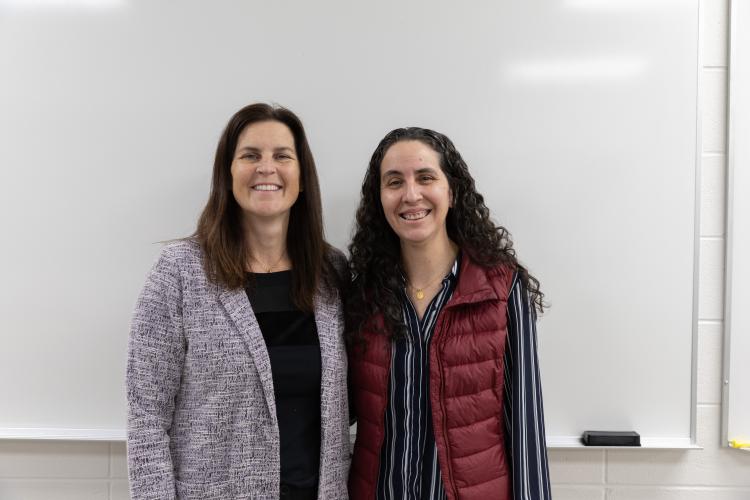
Rena Walker, an instructor in the polytechnic's Centre for Health and Wellness, and recent graduate Geraldine Torres Gonzales (Therapeutic Recreation - Gerontology 2024) conducted a pilot study to determine the optimal length of time to engage clients in therapeutic recreation. Recreational therapy is a health-care profession that uses guided recreation and leisure activities to improve the physical, emotional, cognitive and social well-being of clients.
"Using leisure and recreation as a treatment for people with disabilities, older adults and other vulnerable populations humanizes them and leads to improvements in their day-to-day health, well-being and independence," says Walker. "Recreational therapy, as a profession, does not have a significant amount of research comparable to other fields of health, so we felt it important to analyze a gap we found to ensure the best outcomes for clients."
Initial estimates put engagement windows for older adults with moderate dementia at less than 30 minutes. Walker and Torres Gonzales chose to focus on moderate dementia because mild cognitive impairment has existing research, while severe dementia can be overly restrictive for client engagement.
The study observed recreation activities such as stationary exercises, drumming and bingo. Through the research, Walker and Torres Gonzales found these activities engaged "social aggregation," meaning clients are in a group setting with actions directed by a person toward an object, but their success isn't dependent on direct socialization.
"Based on the data from our observations of recreation therapy activities, we saw clients maintain engagement for an average of 38 minutes before we saw decline," says Torres Gonzales, who now works in the industry. "While the difference between 30 and 38 minutes isn't expansive, it gives insight into session lengths across the board, allowing recreation therapy staff to adjust programming to meet clients' needs more effectively".
This research, supported by a Lethbridge Polytechnic Centre for Applied Research Internal Fund research grant, an initiative intended to develop applied research capacity through short-term funding for employees.
"This was an opportunity to show our students that research in TRG is a viable option for expanding learning opportunities," says Walker. "These studies don't need to be large; they can even be small projects shared with classmates and colleagues. This is an avenue for change in the sector and will result in better outcomes for clients."
Prior to publishing their findings in October, Walker has presented to several stakeholder groups, such as the Alberta Therapeutic Recreation Association and Seneca Polytechnic in Ontario. As for what's next, Walker says there's room to continue.
"Having these findings come from a relatively small institution in Canada and published in a prestigious American health journal [the Therapeutic Recreation Journal], even as a pilot study with a small sample size, targets an important gap that others in the field missed," she says. "Now, we can tie this into the classroom setting when we talk about client engagement and assessment."
Lethbridge Polytechnic offers TRG as a two-year diploma program, both on-campus and online and has five transfer agreements with universities in Alberta, British Columbia and Australia for students interested in furthering their learning. Within six months of graduating, 80 per cent of program graduates find employment in the field. To learn more about the TRG program, visit lethpolytech.ca/trg.