



What if there was a set of skills that would supercharge you to succeed, not just at work, but in life? Turns out, there are. Luckily for University of Calgary students, professors across disciplines are knitting them into their courses to help students build up for what comes next.
Future Skills Innovation Network (FUSION) is a collaborative network of Canadian universities focused on fostering skill development to prepare students for the future economy through open-access modules ready for students to take or educators to incorporate into their courses.
The skills include adaptability, AI literacy, collaboration, communication, constructive dialogue, creativity, digital literacy, inclusivity, innovation, metacognition, problem solving, self-management, and well-being.
"There's so much research that shows that transferable skills are essential to success in life and career. With the workforce being transformed by new technologies, the skills that make us distinctly human are so important," says Gillian Robertson, BComm'08, Future Skills specialist in the Office of Signature Learning Experiences.
"Last year, 12 faculties piloted Future Skills in courses and curriculum, and it confirmed that these modules work and can flex to any level of learner or discipline, supporting students' lifelong learning."

Jenny Godley, faculties of Arts and Graduate Studies. Photo Credit: Elyse Bouvier
Skills reflect a new chapter of graduate studies
Dr. Jenny Godley, PhD, associate dean of transdisciplinary scholarship in the Faculty of Graduate of Studies, and a professor in the Department of Anthropology and Archaeology, leveraged Future Skills in two recent instances: an undergraduate sociology course, and an introduction to transdisciplinary research with the very first cohort of transdisciplinary graduate students.
"It's a unique cohort of students because it's a new program and, by the nature of it, there are a lot of necessary skills to do research that the Future Skills modules cover," says Godley.
"The definition of transdisciplinary research is to tackle the wicked problems of the world. For these students, they are already very transdisciplinary with an array of skills, which is why they chose this program."
Instead of assigning a particular module, Godley had students first evaluate their skills and then choose four modules to complete. Some chose the skills they were least proficient in, while others did the opposite.
"It was interesting to see their decision making," she says. "For the ones who did things they thought they knew, they said it reinforced their practice or gave them new ideas. Some said, I know I'm not creative, so I am going to do the creativity module to work on it.' They all benefited from the modules they took."
Godley notes that, for many graduates, the jobs they are going into require many skills that are not necessarily content-based because of our easy access to information online.
"It's important to learn how to communicate, understand where information comes from, or who is left out of it," she says. "These skills are what you need to do that work and be successful in the job market, and life in general."
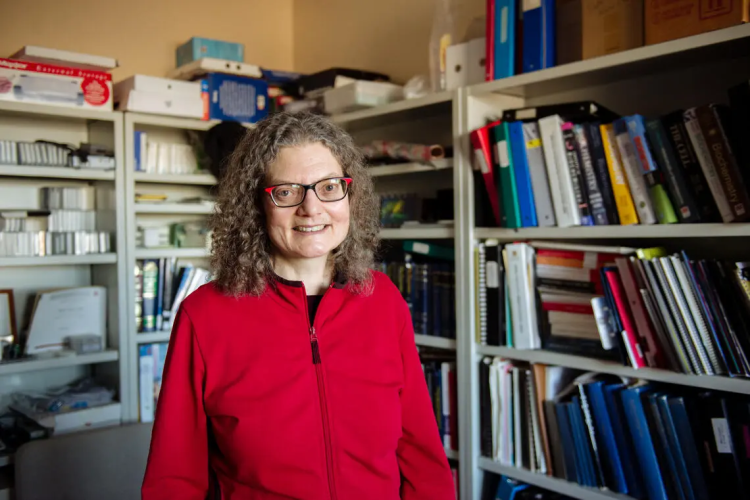
Marie Fraser, Faculty of Science. Photo Credit: Elyse Bouvier
Connecting skills to CVs in biochemistry
In Dr. Marie Fraser's fourth-year structural biology class, students learn how to determine the crystal structures of macromolecules. Recognizing a missing reflection component in the capstone-level course, Fraser, PhD, incorporated the communications module to support students as they developed a scientific poster for their coursework.
Through the module, students learned about communications skills and considered how to apply them to communicating scientific research.
"I wanted students to talk about their experiences making the posters, and reflect on how it fit with the skills in the module," says Fraser, a professor in biological sciences in the Faculty of Science.
She notes that it was also helpful for students to make the connection to include their skills on their CVs when they later apply for jobs.
"I hope these students will use their education for the basis of their career, to go onto something else," Fraser says. "We do a lot of teaching, but we don't always show how a student can apply their skills in the future."
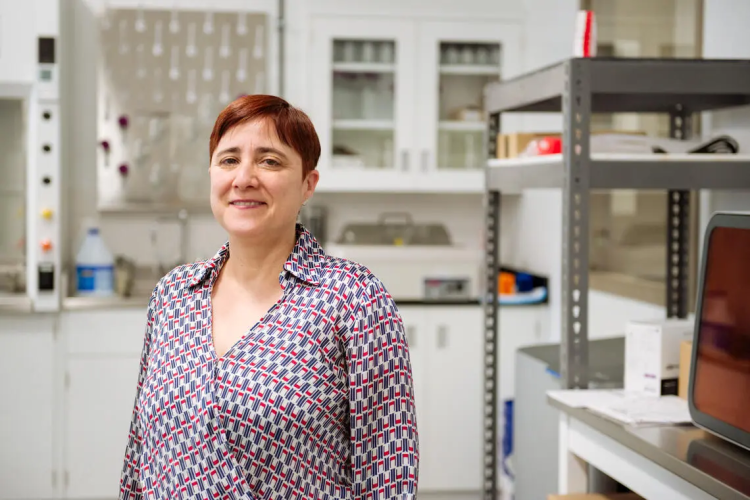
Laura Curiel, Schulich School of Engineering. Photo Credit: Elyse Bouvier
Gaps offer opportunities for growth in engineering
Dr. Laura Curiel, PhD, an associate professor in the Schulich School of Engineering, has seen first-hand where her students struggle, and it inspired her to bring Future Skills into her biomedical engineering class.
In her capstone design course, clients give students a problem to solve, often ending up with a real prototype. Students work in big teams on complex challenges over the course of a year.
Curiel chose collaboration, self-management and adaptability to support students in the areas she has seen the most struggle.
"Conflict with the team, didn't have the time, and, What do I do now that it's not working?'" she says. "These are skills they will benefit from."
Students explored, applied and reflected on the module content as part of their final grade.
"It's a long project and students can struggle to organize their time and efforts from the beginning, which stresses them out," says Curiel. "It's a project that has no solution, so they can also struggle in teams. It's undefined; things change or don't work, so they have to pivot. The modules helped them realize how to better manage their time, adapt and work with others."
She was most impressed with the reflection element for students. Students can identify that areas they first thought were strong perhaps have opportunity for growth, or, conversely, they were stronger in an area than they initially thought.
"When I was presented with the modules, I knew it was something we needed to integrate, especially for engineers. These are the skills they only develop when they are working," Curiel says. "It was a perfect fit to expose students early, before they get out into their careers."
The Future Skills Innovation Network (FUSION) is a collaborative network of Canadian universities focused on exploring inclusive and innovative learning approaches to foster skill development and prepare university students across the country for the future economy. Future Skills modules created by FUSION are available to the UCalgary community. Instructors interested in incorporating the modules into their courses can reach out for more information.


