Canada's boreal wetlands may look still and peaceful, but beneath the surface they are constantly changing. Invisible exchanges between the ground and the atmosphere shape how these ecosystems function over time, driven in large part by the movement of carbon.
Queen's researcher Ian Strachan (Geography and Planning) is working to understand how these shifts shape ecosystems, particularly in wetlands altered by human activity, helping inform how they are managed and restored over time. These environments, including marshes, bogs, and fens, play a key role in regulating the climate.
"People often think of wetlands in terms of water, flooding, or the landscape they see from the road," says Dr. Strachan. "What makes them so interesting scientifically is that they are doing much more than most of us realize."
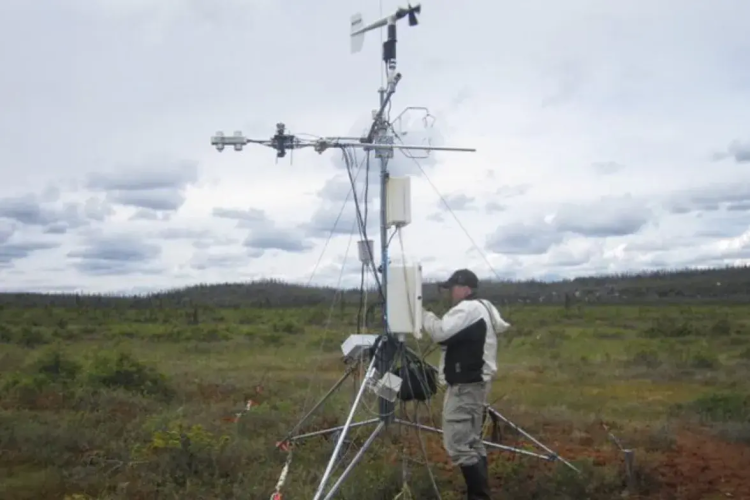
Dr. Strachan sets up a flux tower in northern Quebec to monitor gas exchange between land and air.
Wetlands act as natural carbon sinks, meaning they remove carbon from the atmosphere by storing it in waterlogged soils over long periods. Peatlands are especially effective at this, building up thick layers of organic material that can lock carbon away for thousands of years. Because these soils are low in oxygen, organic material breaks down slowly, allowing carbon to accumulate instead of being released into the air.
When these environments are disturbed through activities such as drainage or peat extraction, that balance can shift. Instead of storing carbon, they can begin releasing greenhouse gases like carbon dioxide and methane, contributing to climate change.
Tracing carbon in wetlands
Dr. Strachan leads the Atmospheric and Environmental Research (AER) Lab. Much of this work takes place in the field, where his team collects data directly from wetlands over weeks, months, and even years.
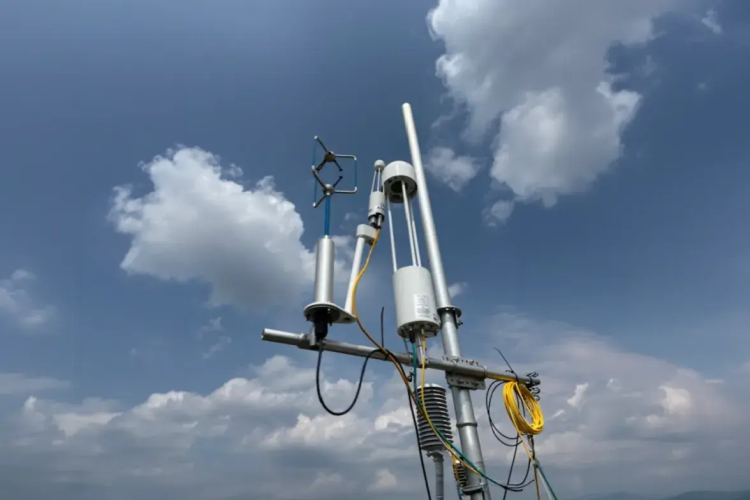
Eddy covariance instruments capture rapid measurements of air movement and gas concentrations above the surface.
To capture these changes, they use a technique called eddy covariance, which takes high-frequency, continuous measurements of turbulent air motion and greenhouse gas concentrations to measure how gases move between plants and the atmosphere. Other sensors track temperature, moisture, and sunlight, helping the team understand how environmental conditions shape those changes over time.
"One of the challenges with this work is that the most important processes are not always visible," says Dr. Strachan. "You have to measure them carefully before you can begin to understand their scale and importance."
A new generation in the field
After decades of studying these systems, Dr. Strachan has seen how scientific understanding of climate change has evolved. What was once debated is widely recognized today, and his work now includes training the next generation of researchers who are building on that foundation.
That next generation includes MSc student Katherine Bot (Geography and Planning). She began working with Dr. Strachan as an undergraduate at Queen's and contributes to research on fen restoration, a type of wetland shaped by water flow and vegetation that responds differently to disturbance.
Bot examines how plant communities develop after disturbance and how those changes shape greenhouse gas exchange over time. This work takes her to field sites in Manitoba, where fen restoration is closely tied to industrial activity.
Alongside her hands-on fieldwork, Bot is developing skills in data analysis and interpretation, working with measurements collected on site to better understand how fens respond to disturbance.
Boardwalks allow researchers to move across saturated fen landscapes without disturbing the ground.
"Spending time in these environments really changes how you see them," says Bot. "You start to understand how important they are, not just as landscapes, but as part of how we respond to climate change."
The data collected in the field is only one part of the process. Interpreting those patterns over time helps researchers understand how different restoration choices play out on the ground.
Informing environmental decisions
In regions where fens are disturbed by industrial activity, active restoration efforts can shape how these landscapes recover over time. The work being done at Queen's is helping to build the evidence needed to guide those decisions, providing insight into how different approaches can influence long-term outcomes.
"What we are measuring has real implications for how these landscapes are managed," says Dr. Strachan. "Even small differences in how and when restoration happens can change the outcome."
That evidence is increasingly important as governments and industries look for ways to reduce environmental impact and meet climate targets. Research like this helps connect what is happening in the field to the policies and practices that shape how land is used.
"The decisions we make about these landscapes have effects that last well beyond what we can see right away," says Dr. Strachan. "The more we understand how these systems work, the better prepared we are to protect them."