For international students, a sense of belonging is shaped not only by campus life but also by what happens in the classroom.
University of Windsor professor Dr. Clayton Smith's research explores how educators can help international students build confidence, make connections and succeed academically.
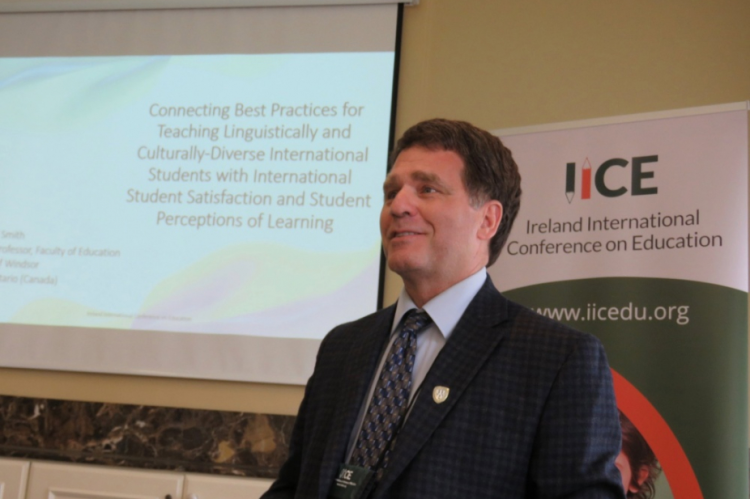
Former University of Windsor vice-provost and dean of students Dr. Clayton Smith draws on his experience in student affairs to explore how educators can better connect with international students. (Courtesy of Clayton Smith/University of Windsor)
"We needed to enhance our understanding of international student engagement. A lot of the frameworks we have seen have been very western-rooted," Smith said.
He advocates for culturally responsive pedagogy, an approach to teaching that recognizes students' cultural backgrounds and experiences as valuable contributions to the learning process.
"The most important thing you can do is know your students and try to understand who they are and why they are here," Smith said.
He recommends collaborative learning strategies, including group work, sharing personal experiences and connecting course content to students' cultural perspectives and ways of knowing.
He also encourages educators to incorporate students' cultural and linguistic backgrounds into classroom activities rather than relying exclusively on traditional textbook approaches.
In his own classroom, Smith puts that philosophy into practice.
"I play a little music before class, and I make sure that the music connects with the cultures of the students I have," he said.
Smith's research has also informed a framework that encourages educators and institutions to consider student engagement beyond classroom participation, recognizing the importance of social connections, academic support and a sense of belonging.
"The more we can know, the more likely it is that we're going to be able to provide the kind of learning that they need, want and deserve," he said.
Central to Smith's work is the idea that responsibility for belonging does not rest solely with international students. Educators and institutions must also adapt their approaches to help students succeed.
Smith said that responsibility is particularly important as Canada limits the number of international study permits it issues.
"There have been caps for study permits. We need to learn how to better take care of the students we do get, and how we can better support their learning environment," he said.
Smith is now expanding the international scope of his research alongside colleague Dr. George Zhou. The pair is editing a new edition of a publication on international student engagement, exploring teaching practices in other countries to identify ways educators can create more equitable and inclusive classrooms.
"We need to have this inner dialogue to treat each student as their own, so that they can be successful and persist until graduation," Smith said. "That's really the heart of the work that we're doing."