


For Tasha Brooks, the most important research questions come from the communities that will benefit from the answers.
They start with questions like: Why are Indigenous Nations that are leading transformative work in governance, education and law facing barriers to economic development? And what would it take to build economic systems designed around Nation priorities?
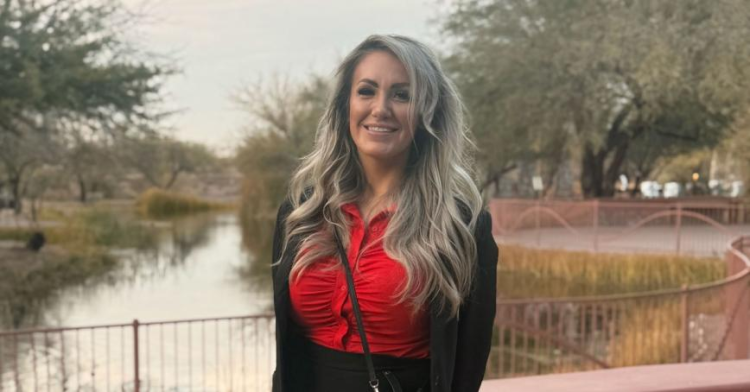
As Royal Roads' newly appointed Research Chair in Indigenous Economic Systems and Development, Brooks is working with Indigenous communities and scholars to help answer those questions.
"For Indigenous Nations, we have so many different priorities going on at the same time," Brooks says, noting positive Nation-led momentum in changes to laws related to education, children and families, elections and land use. "So why are we struggling with economic development?"
Through a series of research projects, she is asking what culturally grounded supports and partnerships are needed for Indigenous Nations and citizens to exercise greater economic agency.
Getting to the heart of it
The question is personal.
Tasha Brooks, assistant professor in the School of Business and Doctor of Business Administration candidate, brings decades of experience navigating her own entrepreneurial path and supporting others to do the same. A member of the Cowichan Tribes, she is a council member and served as the president of Quw'utsun Kwa'atl'kwa Enterprises, the Cowichan Tribes' commercial fishing economic development LP. She is also on the board of the Journal of Aboriginal Economic Development.
The challenge, she says, is complex. Indigenous Nations are advancing multiple priorities at once, and many also navigate structural barriers related to the Indian Act and other external influences that impact economic development opportunities.
That complexity is why Brooks is approaching her research through an "ecosystem lens."
Understanding the bigger picture
Rather than studying businesses in isolation, Brooks is looking at the broader ecosystem that supports Indigenous economic development. That includes governments, educational institutions, community organizations and entrepreneurs themselves. The goal is to better understand whether those relationships are organized around Nation-identified priorities, and to build tools to support ongoing alignment.
"When we think about an economic system, it helps us to think about something much broader than just looking at business or just looking at entrepreneurship. It's really helping us focus on the relationships that exist within that system," she says. "The Nation should be at the centre of this ecosystem."
Finding the path forward
Through her work, Brooks hopes to strengthen the connections between Indigenous communities, researchers, and institutions. The value of doing so is impossible to measure.
"When Indigenous entrepreneurs succeed, it is paying dividends into community," she says, noting it creates jobs and encourages spending within communities. "There's also this cultural aspect of many Indigenous entrepreneurs as well, where they are wanting to either preserve culture or bring culture into their business."
Looking to the future, Brooks is excited by the potential to break down silos and create practical resources and tools to help people. For her, success will be measured by stronger communities, more opportunities for Indigenous entrepreneurs and clearer pathways for Nations to achieve the futures they define for themselves to support intergenerational wealth and well-being.
"I hope we will come to recognize we are stronger together than we could have imagined ever being when acting on our own."