

The wîcihitowin Transition Program helps support and connect students through a multi-day orientation and monthly lunch and learns with cultural components.
New adventures and challenges can be overwhelming to begin with but for Indigenous students leaving their tight-knit families and communities, often for the first time, makes it even more difficult when starting post-secondary. Saskatchewan Polytechnic's wîcihitowin Transition Program helps Indigenous students through this transition and prepares them for their studies by creating a sense of belonging through culture and connection.
"The wîcihitowin Transition Program is a great way of introducing and creating relationships with Indigenous students. It creates a safe space to share and grow," says Jocelyn Delorme, Tourism and Recreation Management student.
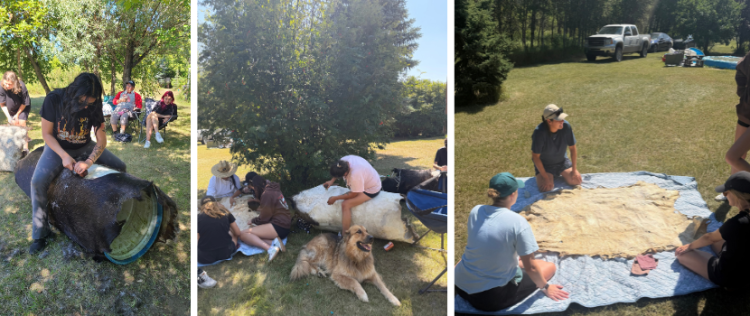
Delorme adds that one of the best parts of the opening week of the program was the outdoor mini culture camp. "It was very educational and fun learning about traditional medicines and hides. It was a beautiful day being outside, learning and interacting with other Indigenous students and staff."
The program is offered in each campus city with a multi-day orientation before the fall semester starts and monthly lunch and learns throughout the academic year. Students connect with academic and cultural resources, campus services and one another.
In Saskatoon, a full-day mini culture camp wrapped up the orientation week, offering space to pause before the pace of school took over. 30 students participated in the event which included preparing hides with a Knowledge Keeper, picking sage, learning about medicine teachings, walking through nature and sharing a barbecue lunch.
Brooklyn Neveu, Saskatoon campus Indigenous Students' Centre coordinator, wanted students to leave the week with more than information. "I grew up in and out of my culture and taking a program with a strong cultural component changed my life in ways I can't even explain," she says. Knowing how deeply that connection can shape a person's path, Neveu felt it was one of her duties to further connect participants of the wîcihitowin Transition Program with their culture.
Two years ago, her ideas for a mini culture camp came to life when colleague Josh Davidson, program head for the Tourism and Recreation Management and Hospitality and Tourism programs, heard about the need for space and offered his 80-acre property.
"Having good relationships with colleagues is a true reflection of miyo wâhkôhtowin and good relations," says Neveu.
Davidson provided the space, prepared a barbeque lunch and helped wherever he could.
"I don't have Indigenous ancestry, but I've grown up with a strong respect for and commitment to being an ally to Indigenous peoples. Being able to offer my land and support this gathering just feels right. I'm grateful to play a small part in creating a space where people can come together, share knowledge and build connections," says Davidson.
The experience has also opened a path for Davidson's own learning. He says the gathering has grown into a meaningful partnership adding, "I've learned a great deal about Indigenous knowledge and the history of the land around me, things I had no idea were right in my own backyard."
For Crystal Buchta, a first-year Culinary Arts student, the week became a memory of discovery and belonging. "Everyday was fun. Meeting new friends and getting to try and learn new things was positively invigorating. I especially enjoyed the last day out on the land, eating, laughing and just enjoying each other's company," she says.
The final day may have ended on the land, but the connections continue on campus. Neveu sees participants gathering in the Indigenous Students' Centre with the people they met during the program. In those familiar faces, shared stories and relationships that carry into the school year, Sask Polytech's commitment to reconciliation becomes something students can experience.
"The wîcihitowin Transition Program gives students early access to culture, academic supports and a community where they don't have to find their way alone," says Deanna Kematch, director of wītōkamāhtōtān Indigenous Student Success. "That early sense of connection matters. Close to 90 per cent of students who participate in the program go on to graduate, showing what can happen when students begin their studies feeling connected and supported."
Since 2009, the wîcihitowin Transition Program (previously known as the Summer Transition Program) has supported more than 700 students. It reflects Sask Polytech's continued commitment to reconciliation and miyo wâhkôhtowin/good relations by creating a place where Indigenous students can feel welcomed, inspired, empowered and a sense of belonging. Programs like this are an important part of our Indigenous Student Success Strategy - Wichitowin ahci kaskihtamâsowin ati nikan.
For more information

400 - 119 4th Avenue South
Saskatoon Saskatchewan
Canada S7K 5X2
www.saskpolytech.ca